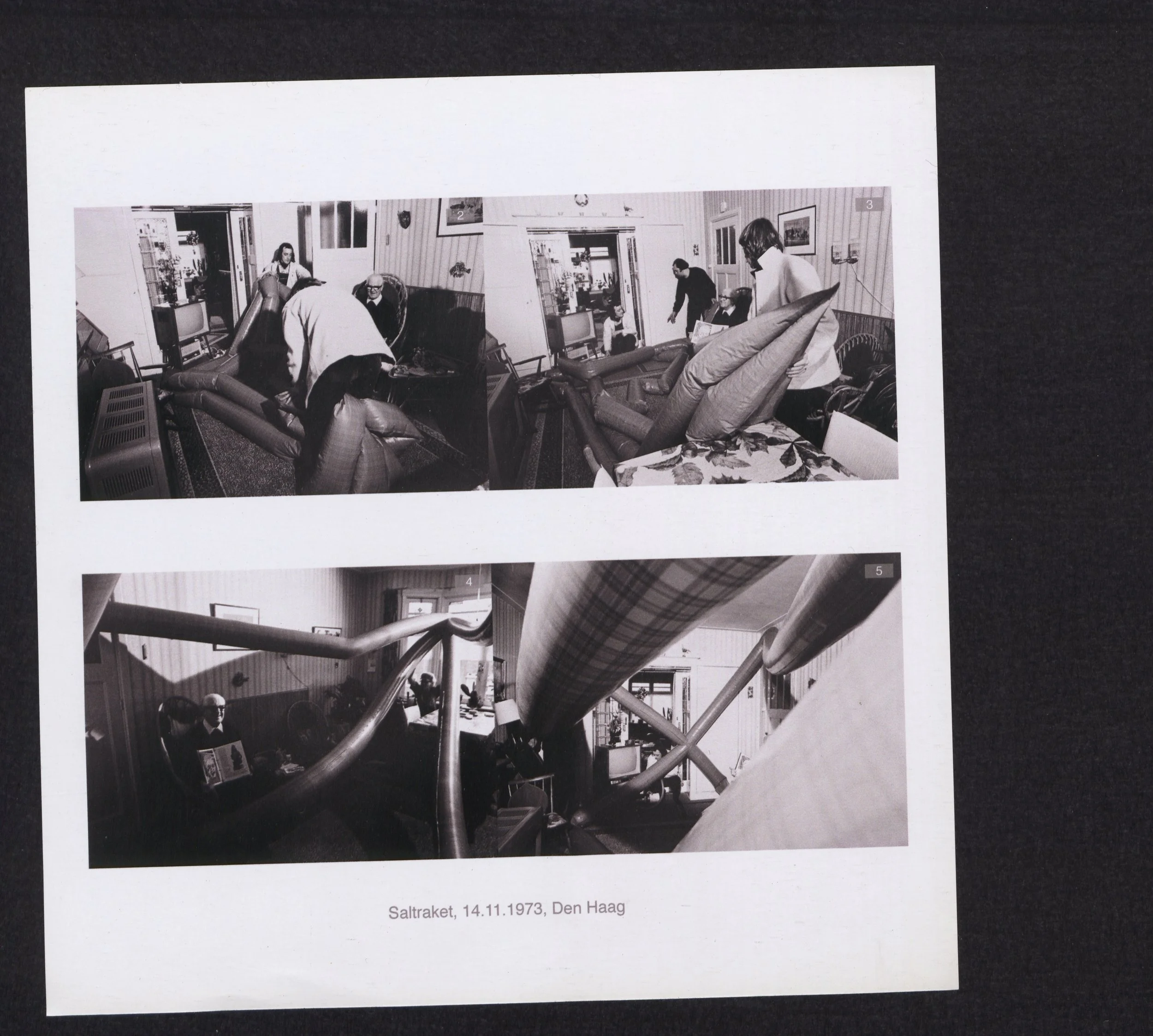
Photos of a rocket in a living room, The Hague, 1973. Photographer unknown.
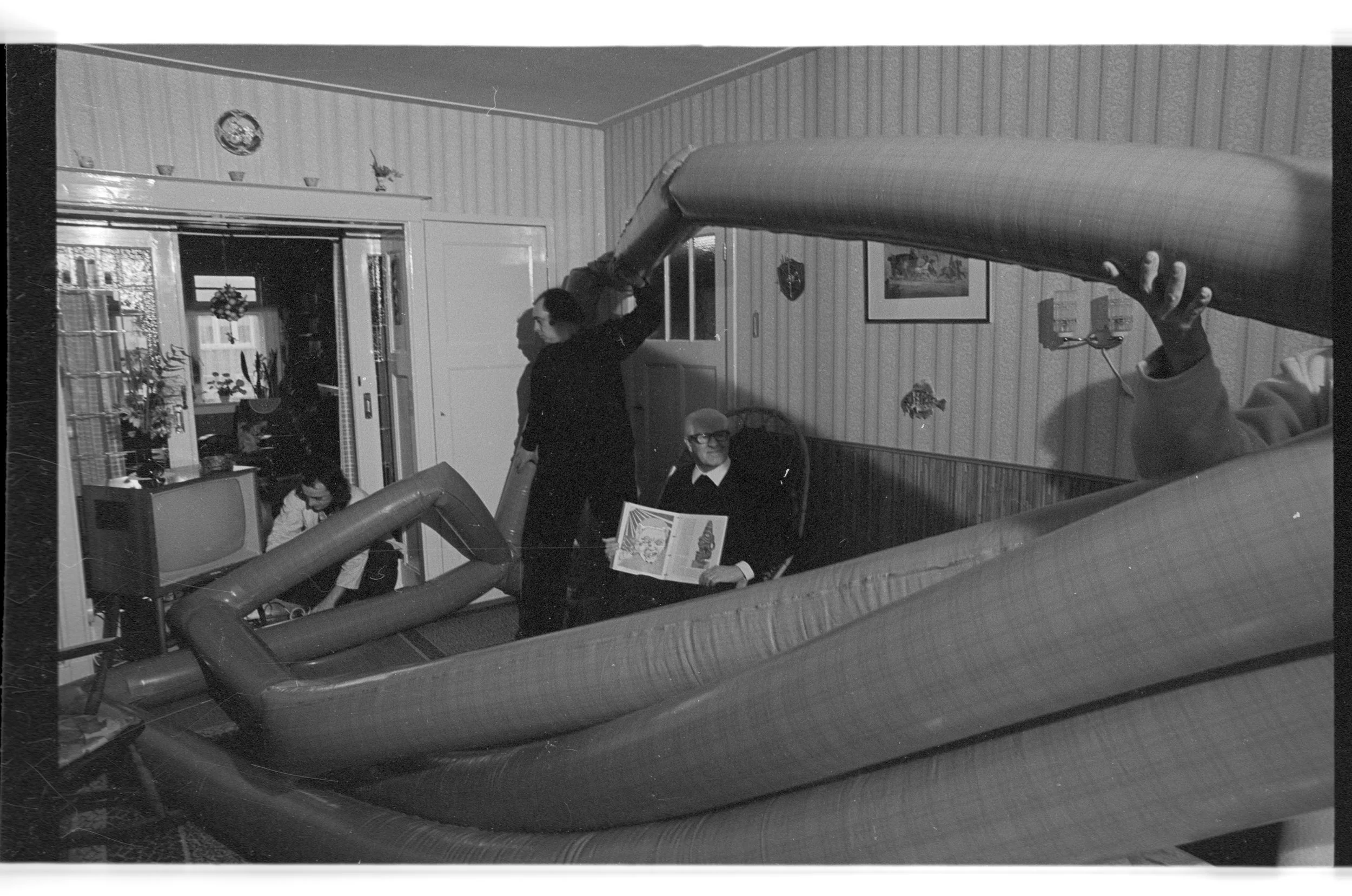
Photos of a rocket in a living room, The Hague, 1973. Photographer unknown.
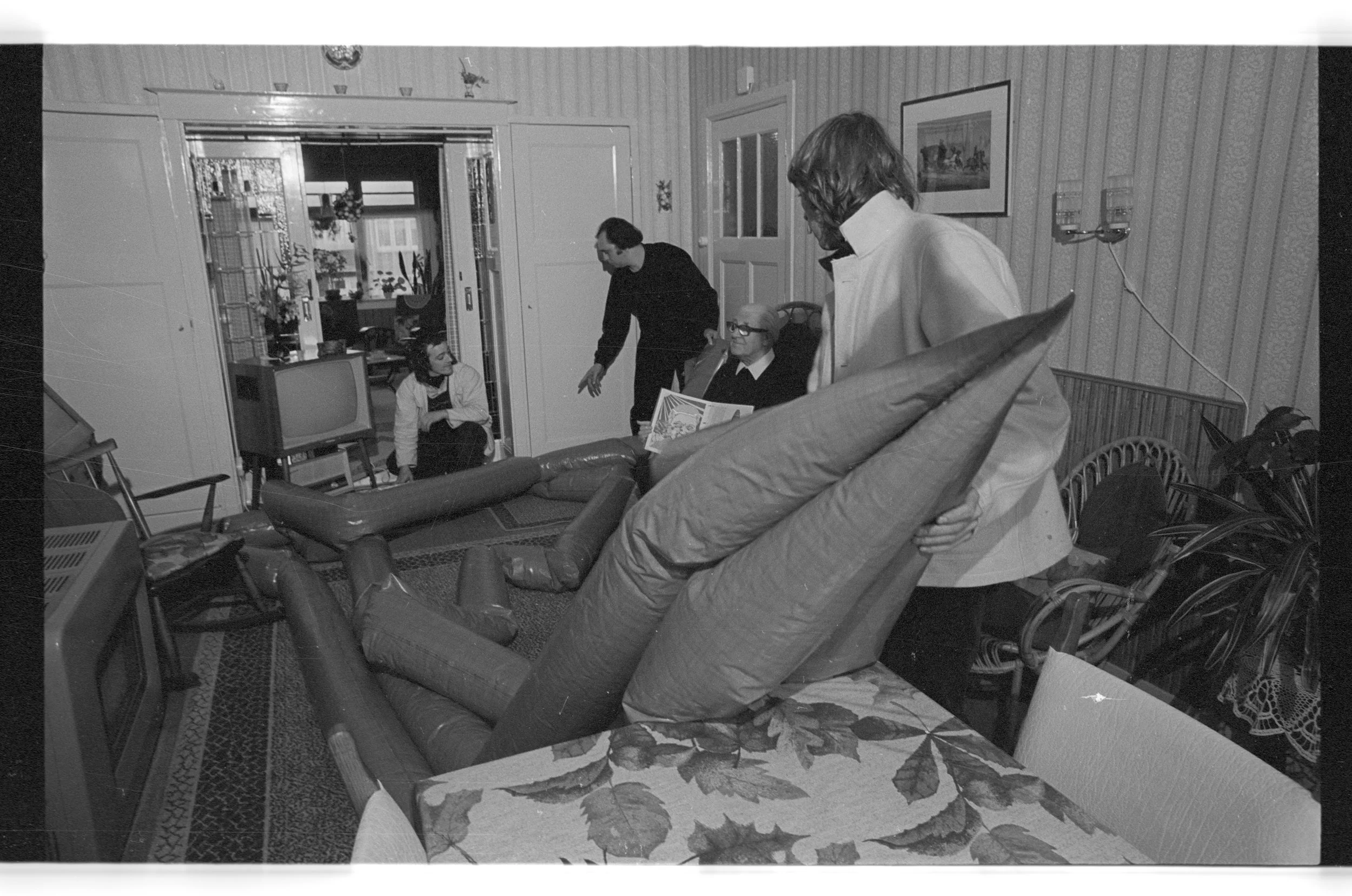
Photos of a rocket in a living room, The Hague, 1973. Photographer unknown.
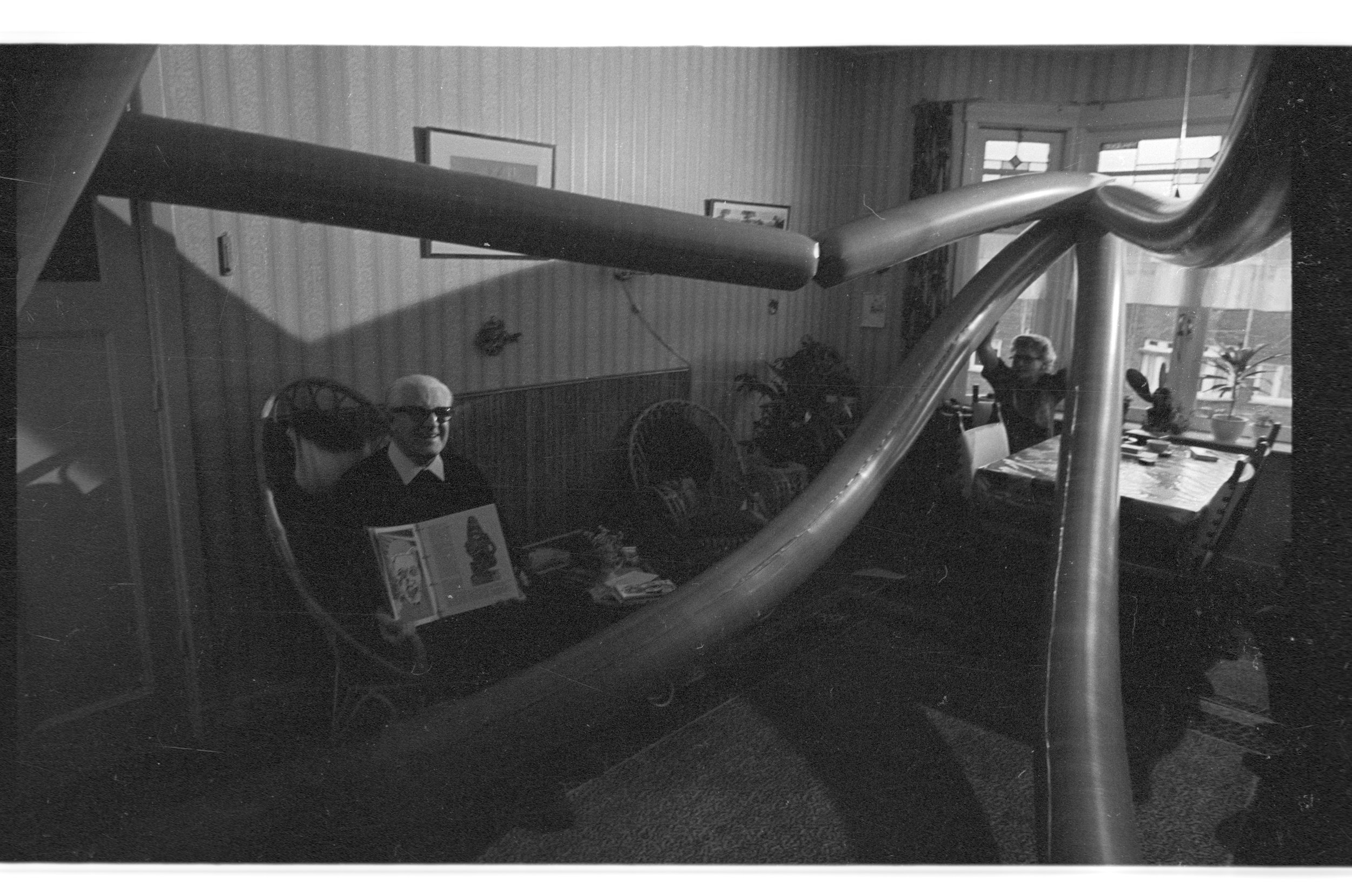
Photos of a rocket in a living room, The Hague, 1973. Photographer unknown.
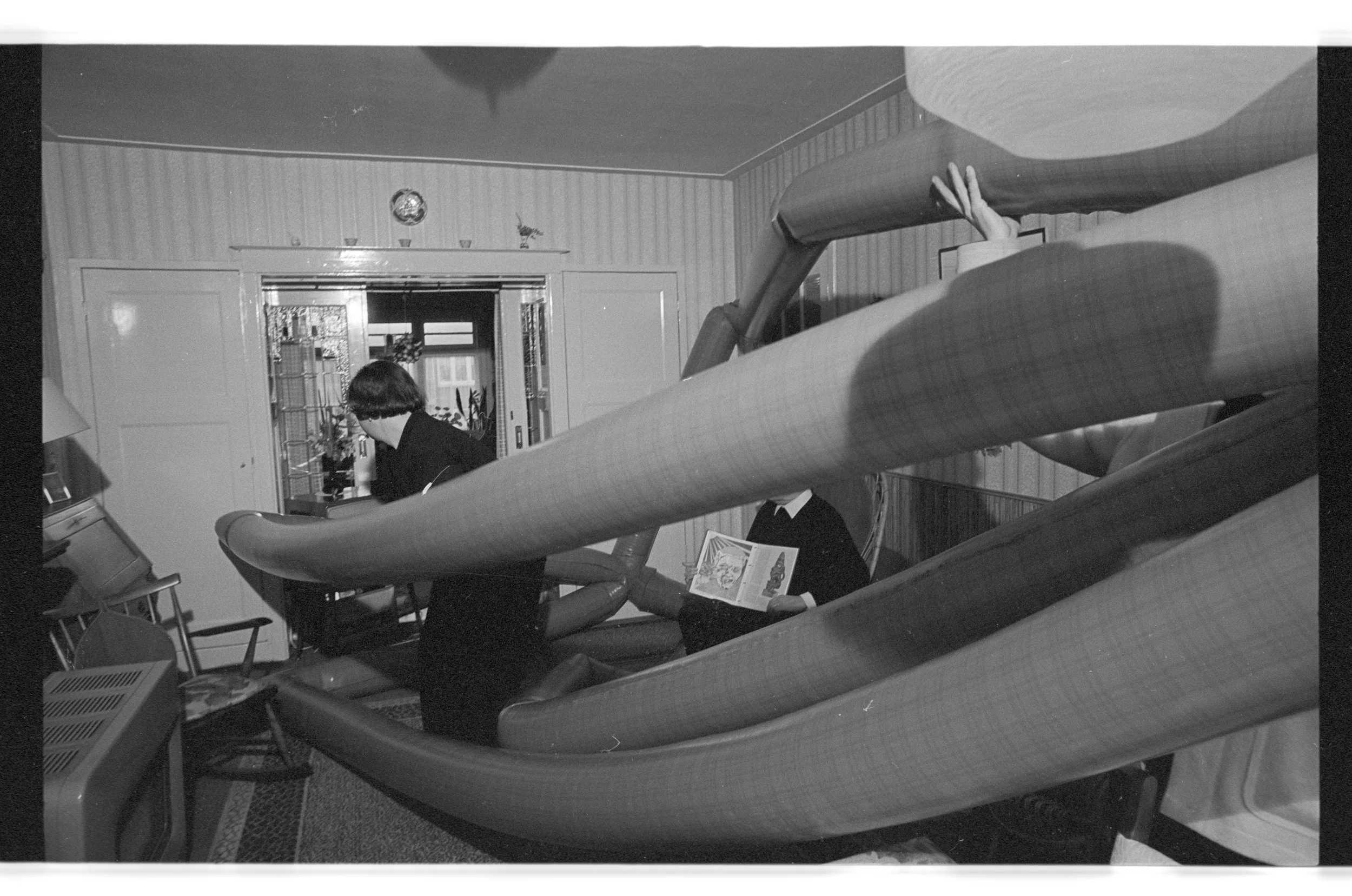
Photos of a rocket in a living room, The Hague, 1973. Photographer unknown.
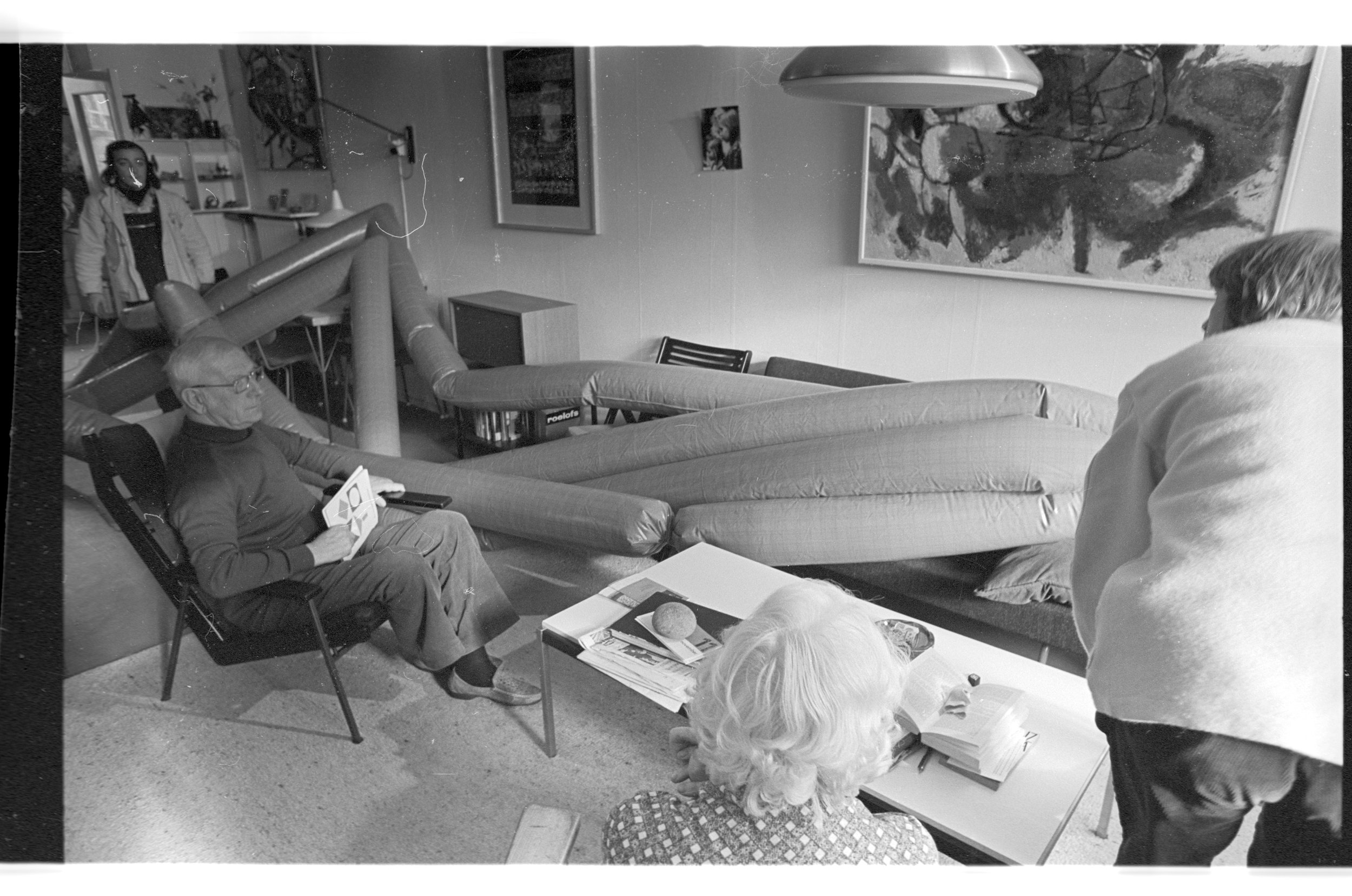
Photos of a rocket in a living room, Osdorp, 1973. Photographer unknown.
Rocket in the living room
“Inflatable rocket in a Dutch living room (the Santa Maria rocket was used here in an inflatable form).
In 1973, Openbaar Kunstbezit invited him to contribute to a series titled “Art as Criticism.” In response to the reactions that followed this series, Roland Van den Berghe declared himself willing to exchange ideas with anyone interested about art as criticism and his contribution to it. A number of subscribers who responded positively to this offered the artist the opportunity to realize the project “Inflatable Rocket in the Dutch Living Room.”
R.V.d.B: “It’s at least rude as a guest in your host’s home to blow up a rocket.” Through a specific approach, this collective artwork was realized nonetheless. I can safely say that we wholeheartedly agreed that such a rocket is really too big for the average Dutch living room.”
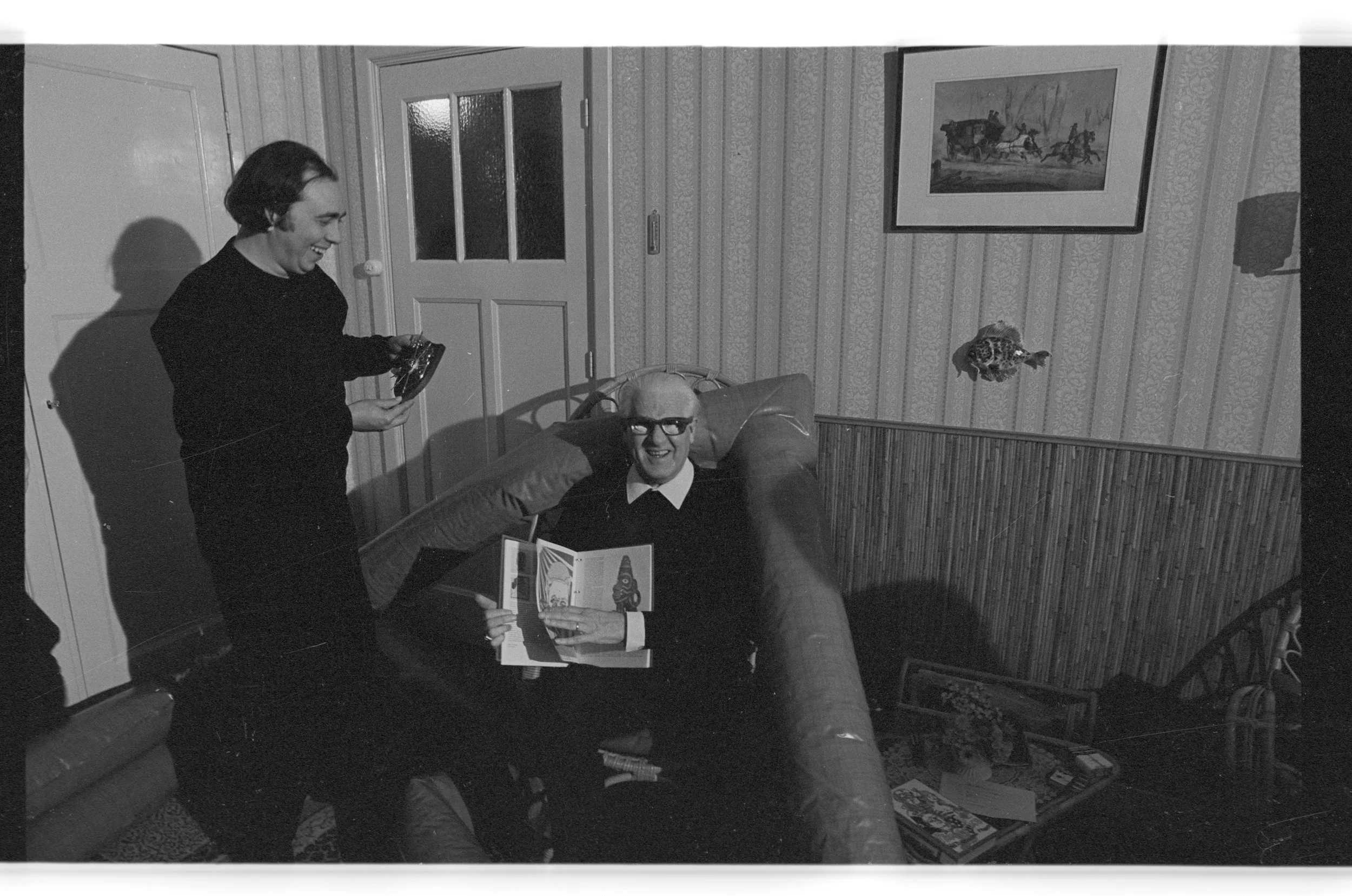
Photo of a rocket in a living room, The Hague, 1973. Photographer unknown.
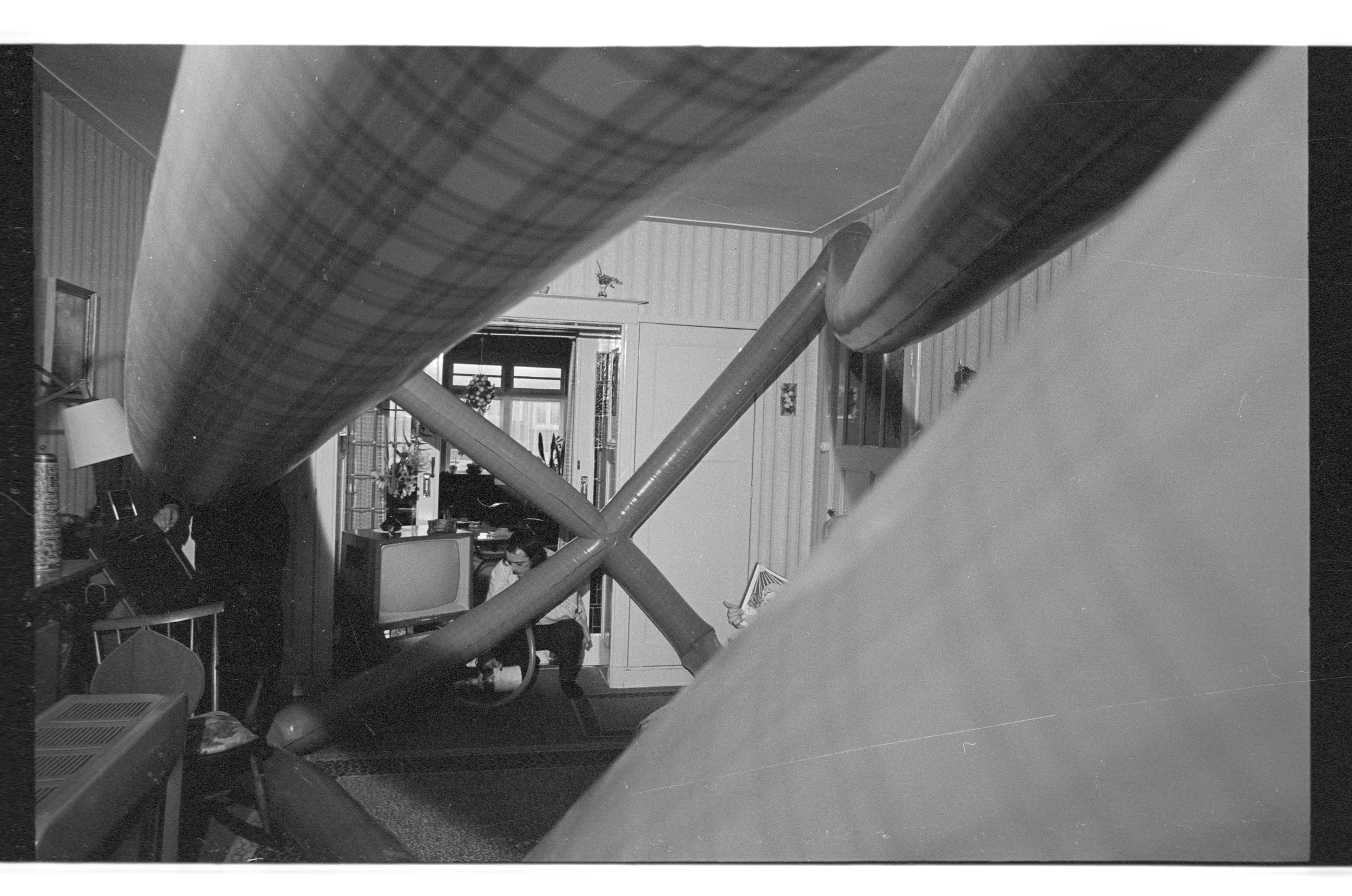
Photo of a rocket in a living room, The Hague, 1973. Photographer: Roland Van den Berghe.
In 1973, I built a 16-meter-tall inflatable rocket out of plastic. It was filled with air. In the U.S., I had already carried out a project involving a homemade rocket at an air base in California. Back in the Netherlands, I created an opportunity to bring a rocket into Dutch living rooms—specifically, those of two participants in the Public Art Collection. Looking at the entire project from the perspective of participation, you could say: I start by letting people into my work, and it ends with them letting me into their world. They came into my space; I went into theirs. Thus, as a visual artist, I became the direct counterpoint to the television in their living room, through which all those images of rockets entered that they didn’t actually see. Suddenly, I blew up the rocket while the lady was pouring tea. A slight startle, a teacup tips over, a twilight shifts. The man of the house sits next to his television, holding his print between his fingertips. I am exhibiting the photographs of this action in Arnhem. This action, too, was a way to briefly bridge the gap between artist and audience: “The artist will visit you with a photographer at your request.”
From: Conversation with Roland Van den Berghe, by Hugues C. Boekraad, March 21, 1983, Gemeenschap Beeldende Kunst, pp. 3–4.
Timeline
November 1970
These drawings were published in the album Glottis, 7 blueprints of a glottis. He sent them to fifty prominent figures (including Ernest Mandel and Gal) with a request to color them in.
March 25, 1971
Publication of the Fabiola portrait in the weekly magazine Humo under the title “Don’t Hesitate to Color!”, which yielded approximately 800 submissions.
January 12, 1972
A similar campaign in the French-language weekly Spécial featuring a portrait of cycling champion Eddy Merckx.
April–June 1973
Publication of a double portrait (Fabiola/Merckx) in Openbaar Kunstbezit.
March 1973
The Santa Maria Project.
Along the perimeter of the Santa Maria rocket base in California, he and students assembled a metal rocket shape covered in plastic.
November 1973
Inflatable rocket in the living room.
This was the physical highlight of the participatory project, in which the artist entered the viewer’s private sphere. Van den Berghe visited two participants who had responded to the series in Openbaar Kunstbezit. In their living rooms, in Amsterdam and The Hague, he inflated a 16-meter-long plastic rocket with air.
Van den Berghe created a sense of menace with the rocket, which people normally only saw as an image on television. He wanted to make it physically tangible in their own living environments.
Photos of a rocket in a living room, Osdorp, 1973. Photographer unknown.