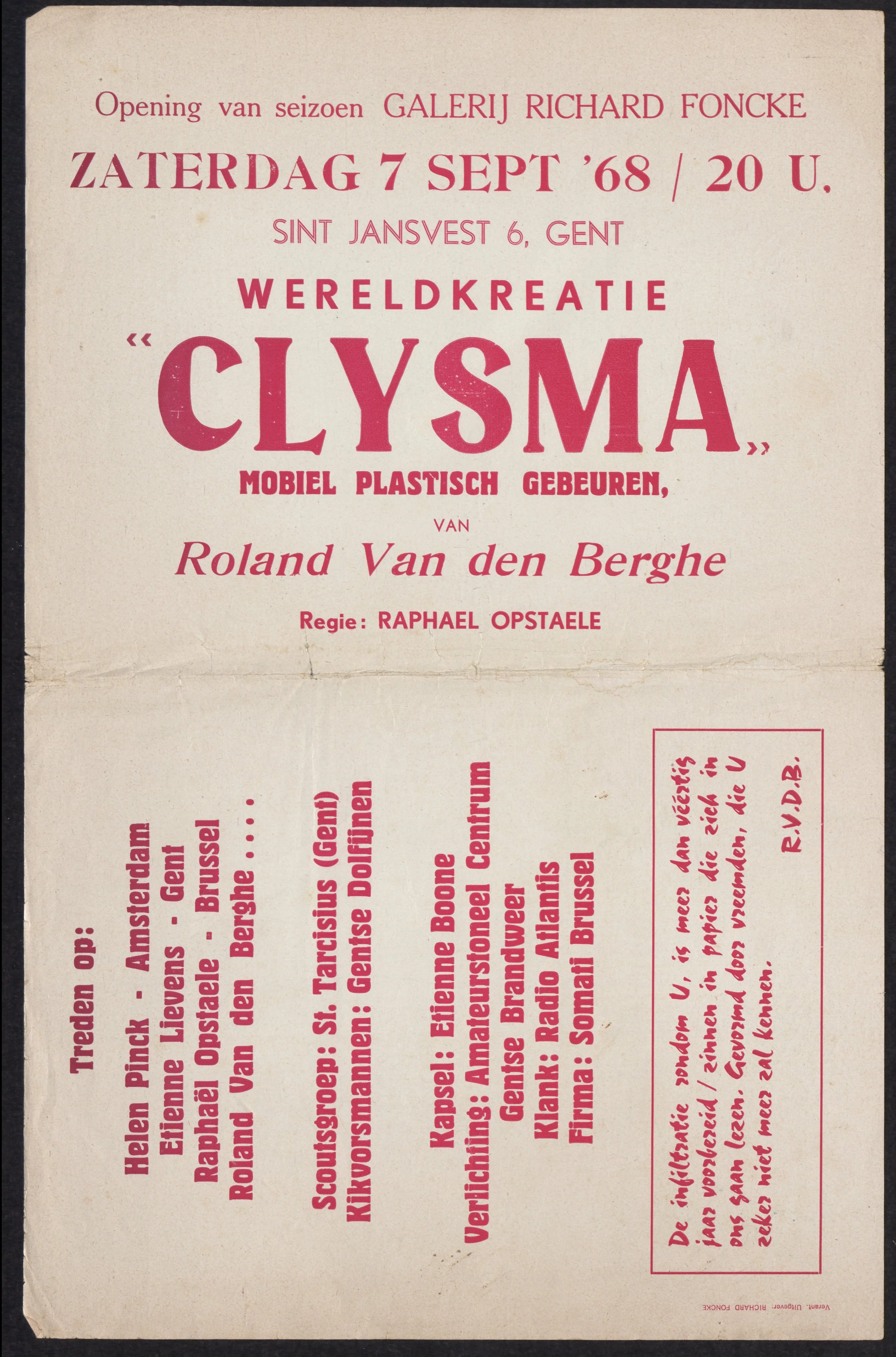
Poster and invitation for the world premiere of Clysma, Ghent, 1968. Scan.
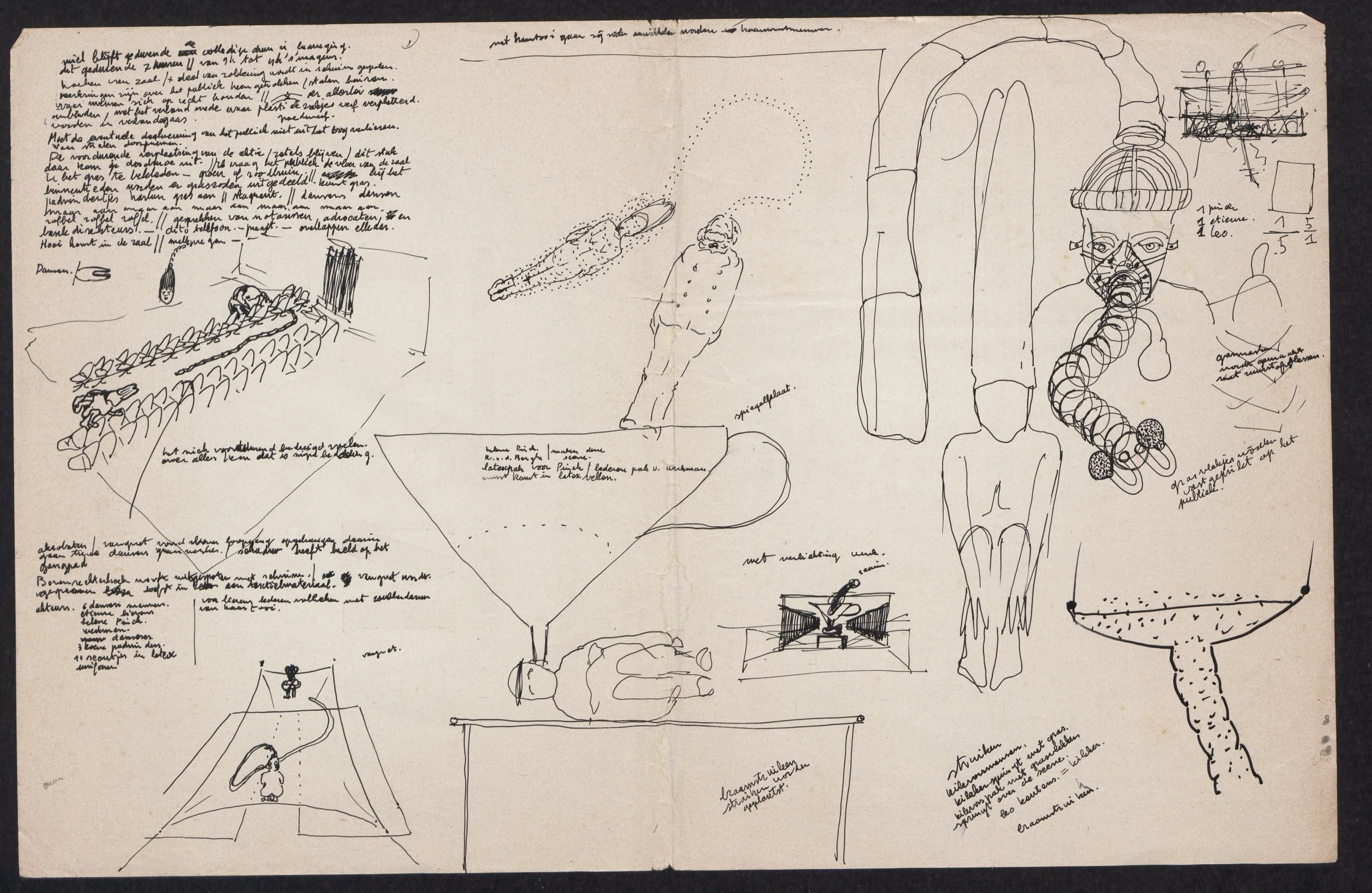
Design drawing for Clysma, Ghent, 1968.
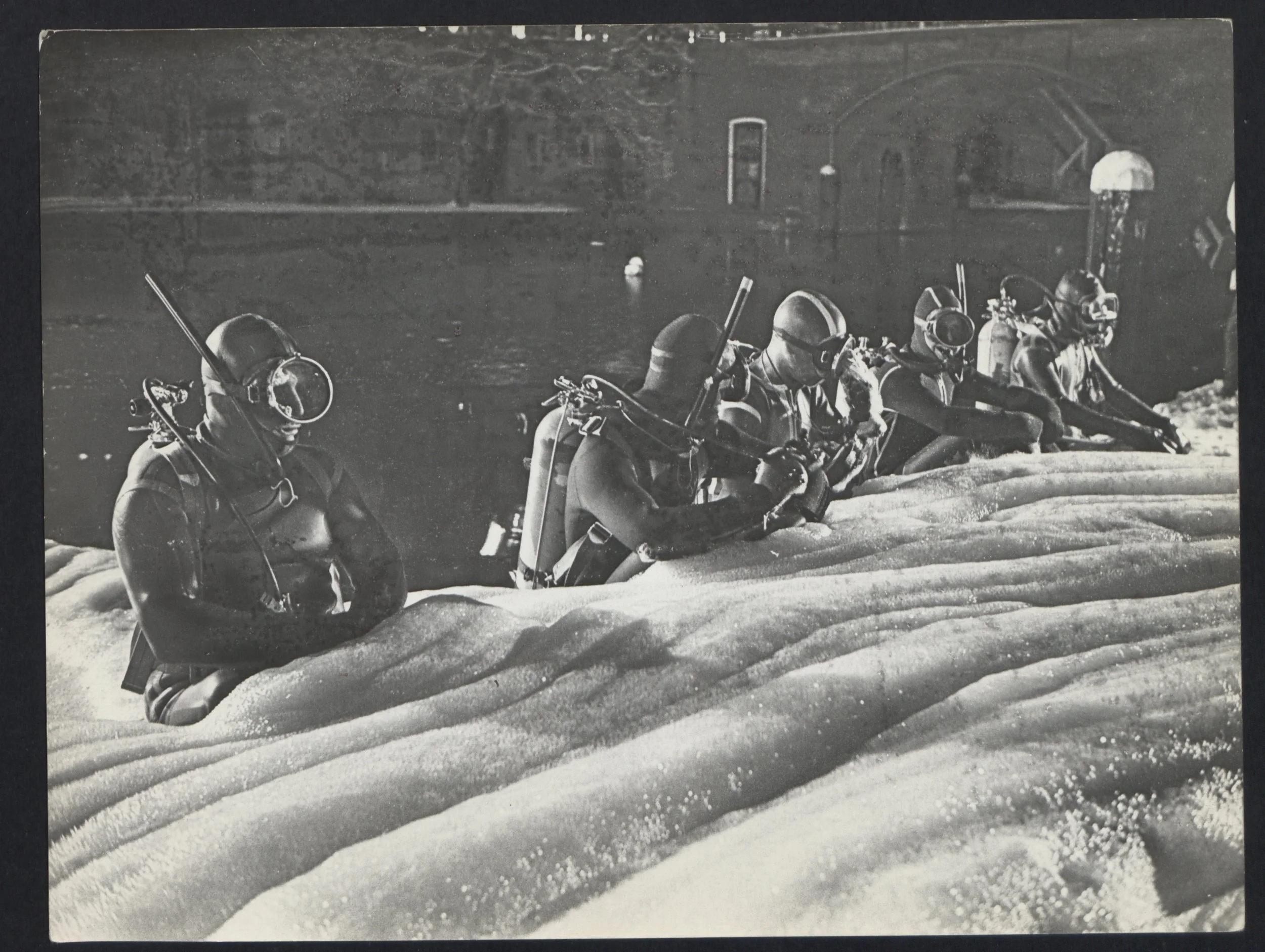
Photo of the Clysma Total Theater, Ghent, 1968. Photographer: Roland Van den Berghe.
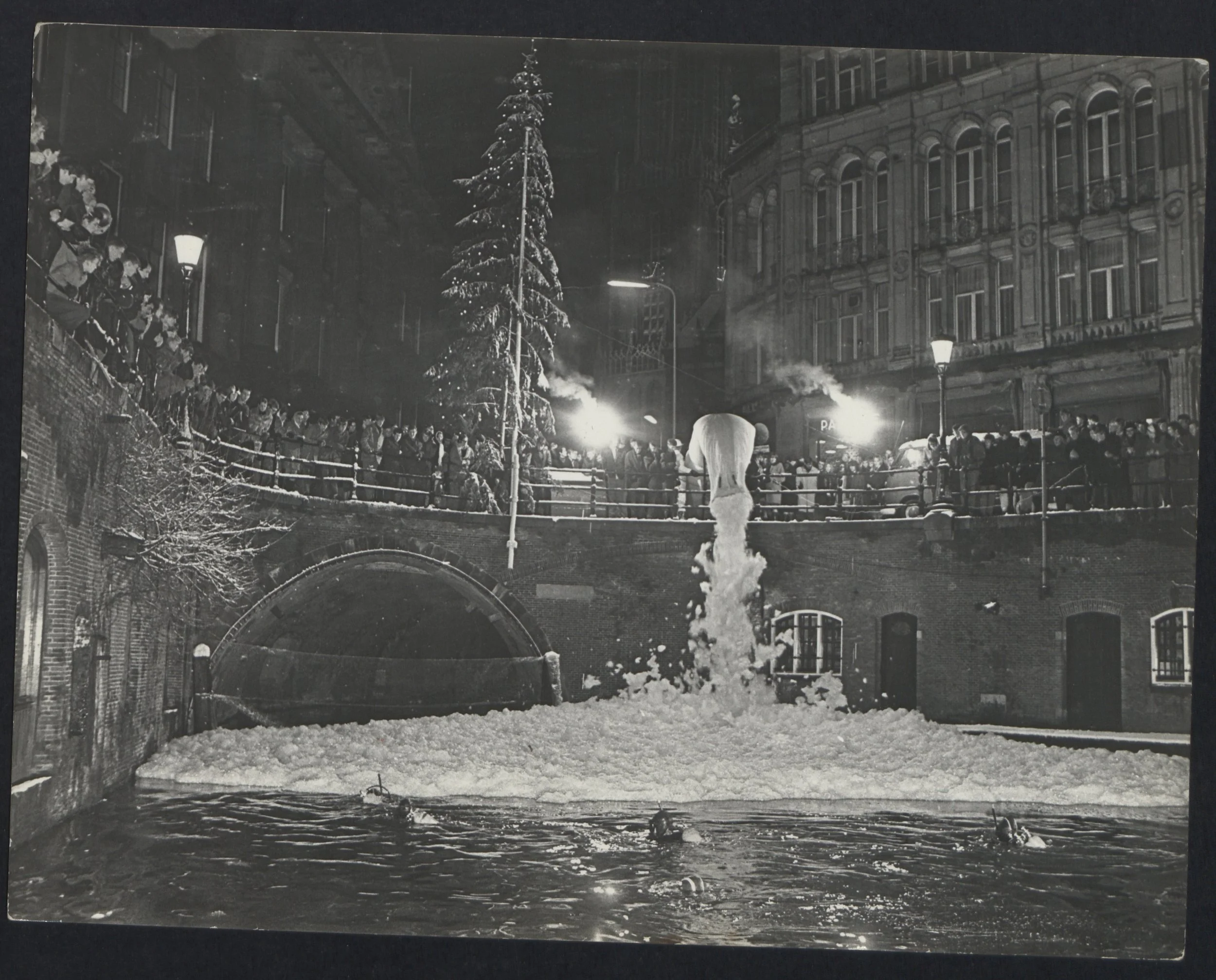
Photo of the Clysma Total Theater, Ghent, 1968. Photographer: Roland Van den Berghe.
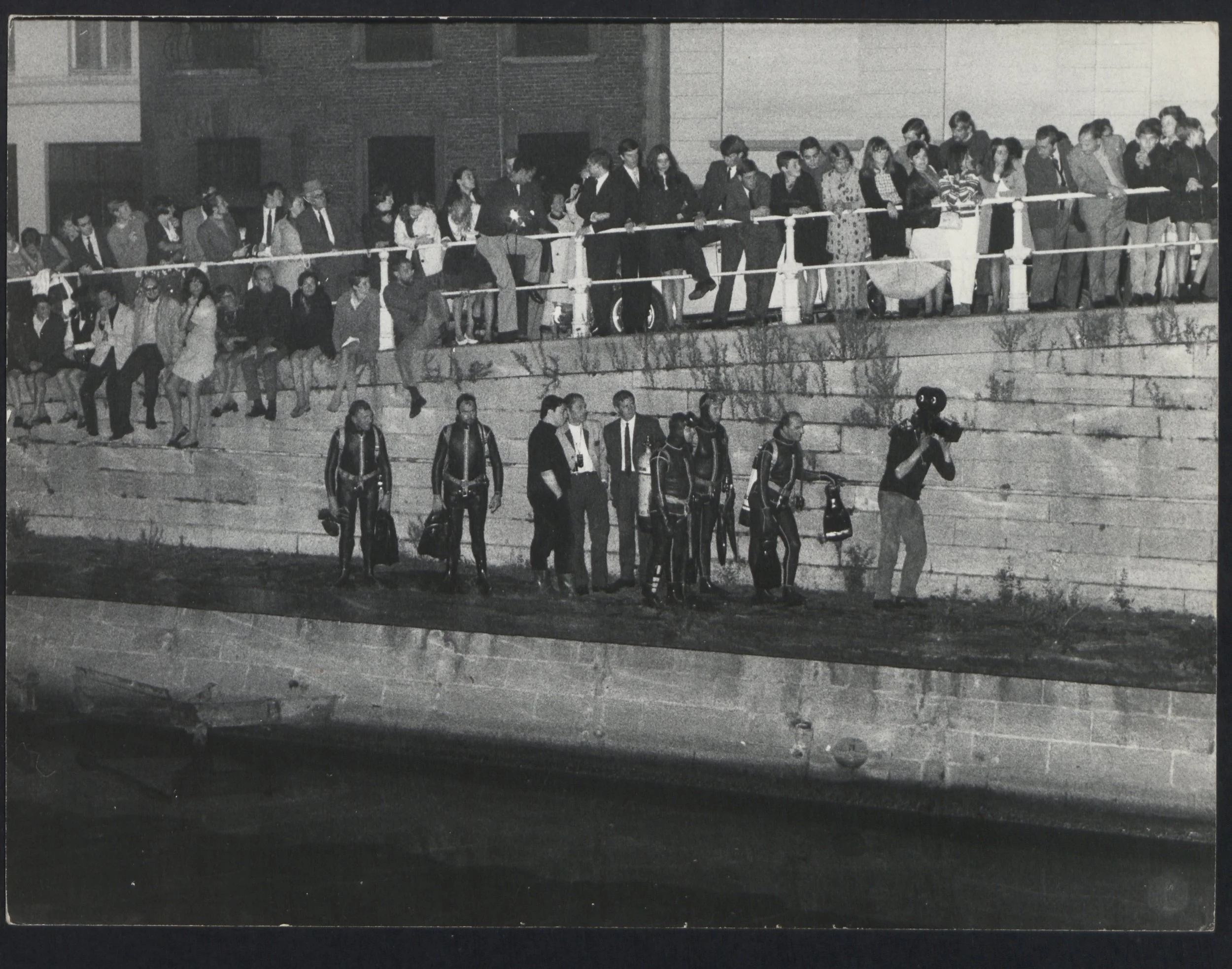
Photo of the Clysma Total Theater, Ghent, 1968. Photographer: Roland Van den Berghe.
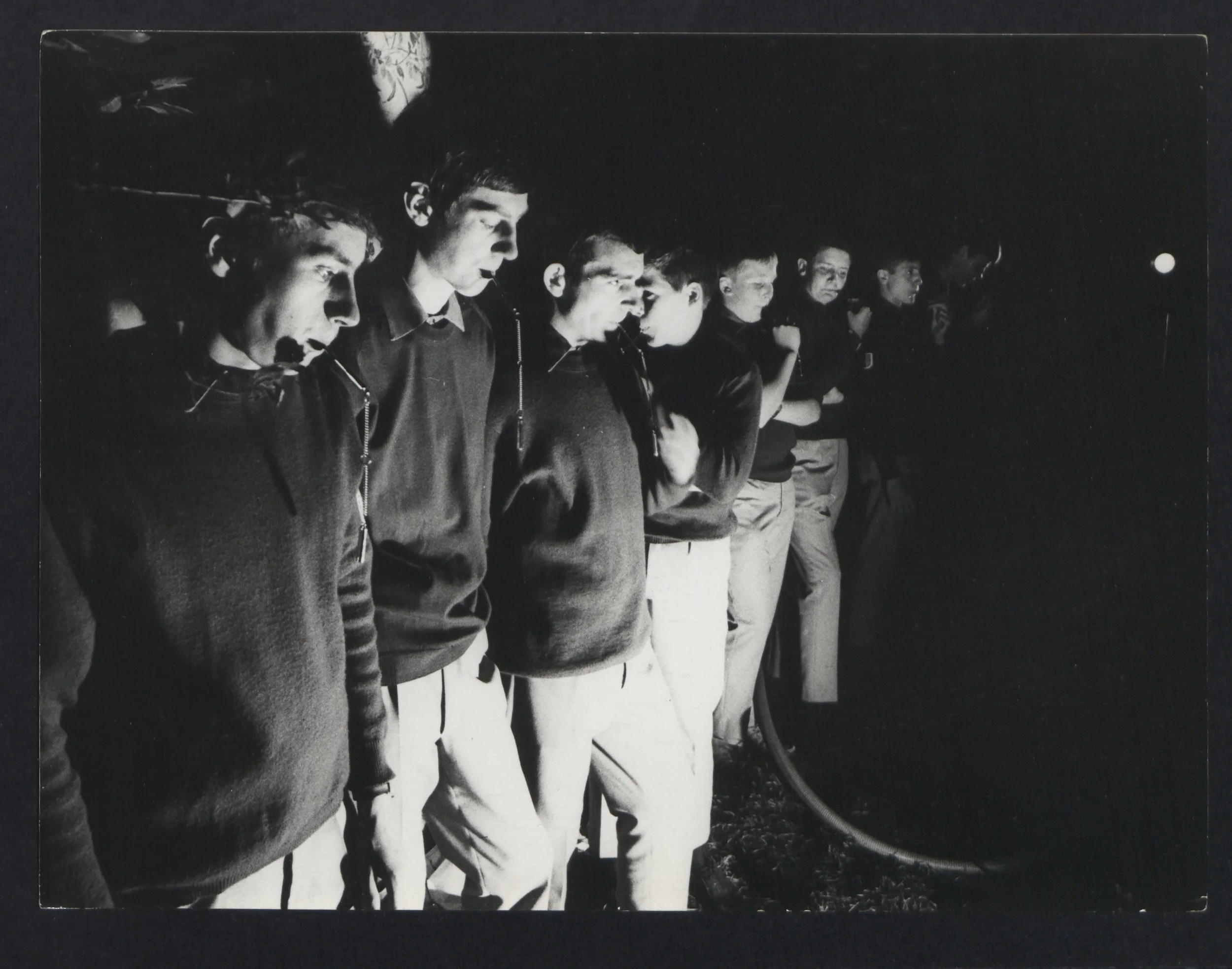
Photo of the Clysma Total Theater, Ghent, 1968. Photographer: Roland Van den Berghe.
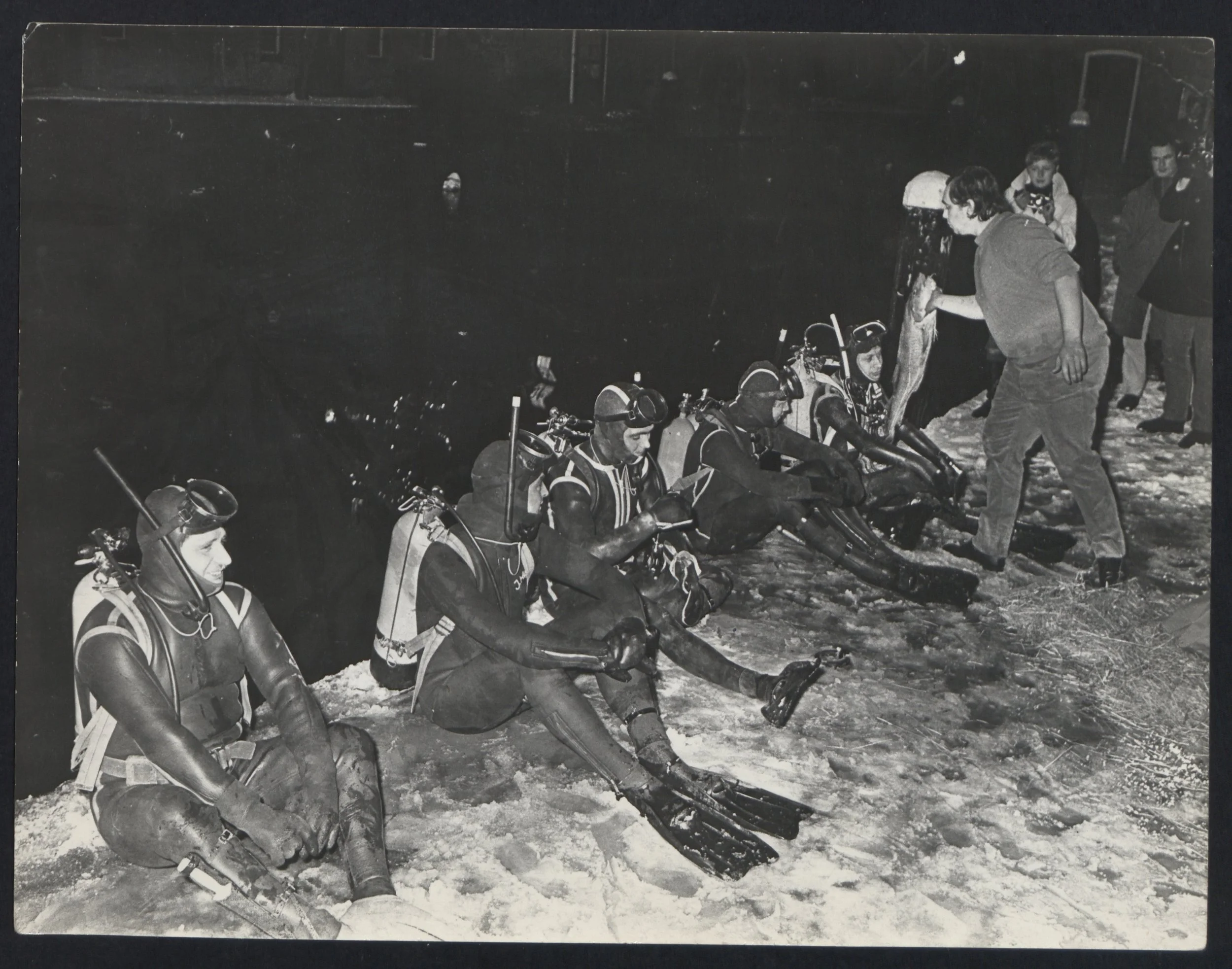
Photo of the Clysma Total Theater, Ghent, 1968. Photographer: Roland Van den Berghe.
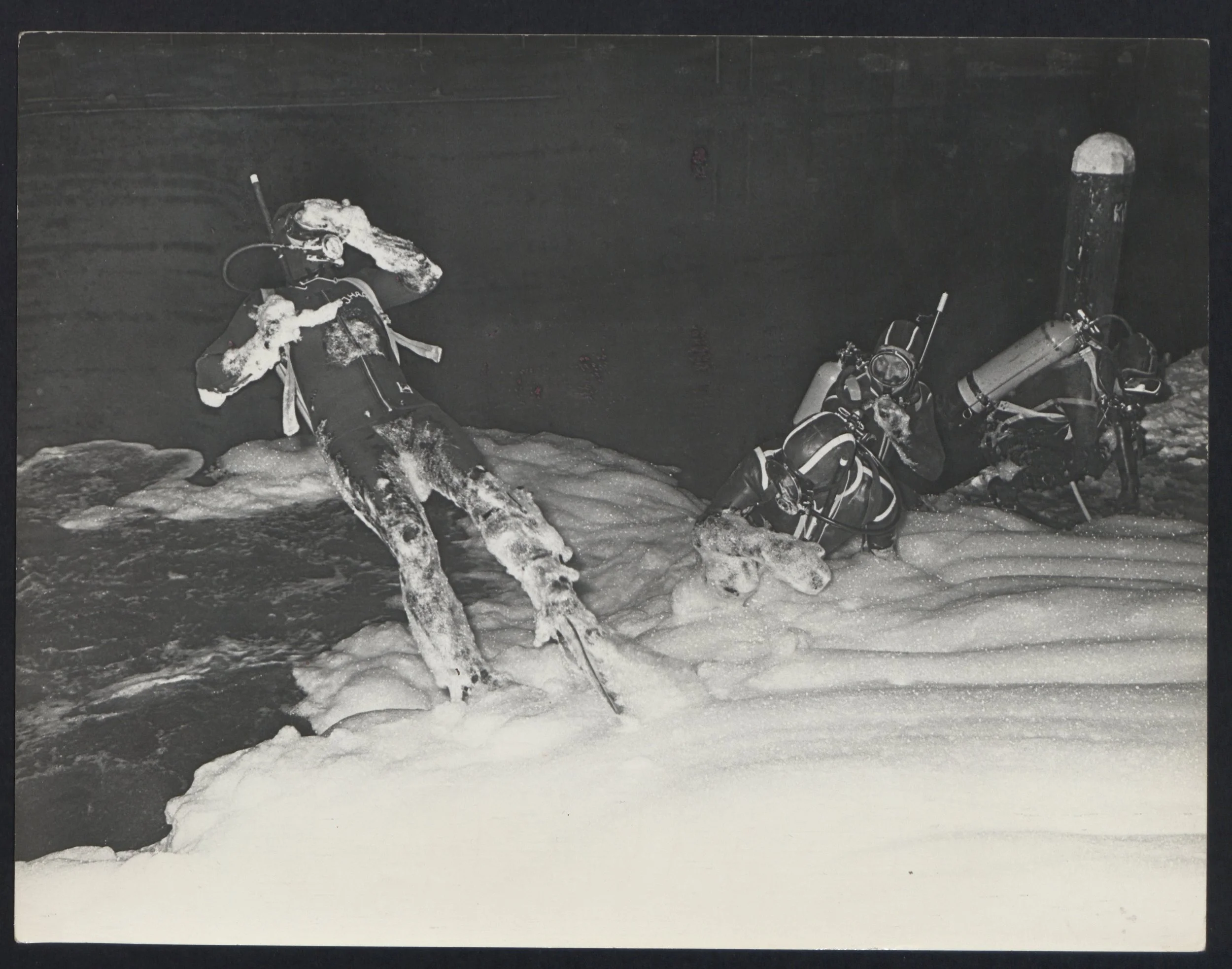
Photo of the Clysma Total Theater, Ghent, 1968. Photographer: Roland Van den Berghe.
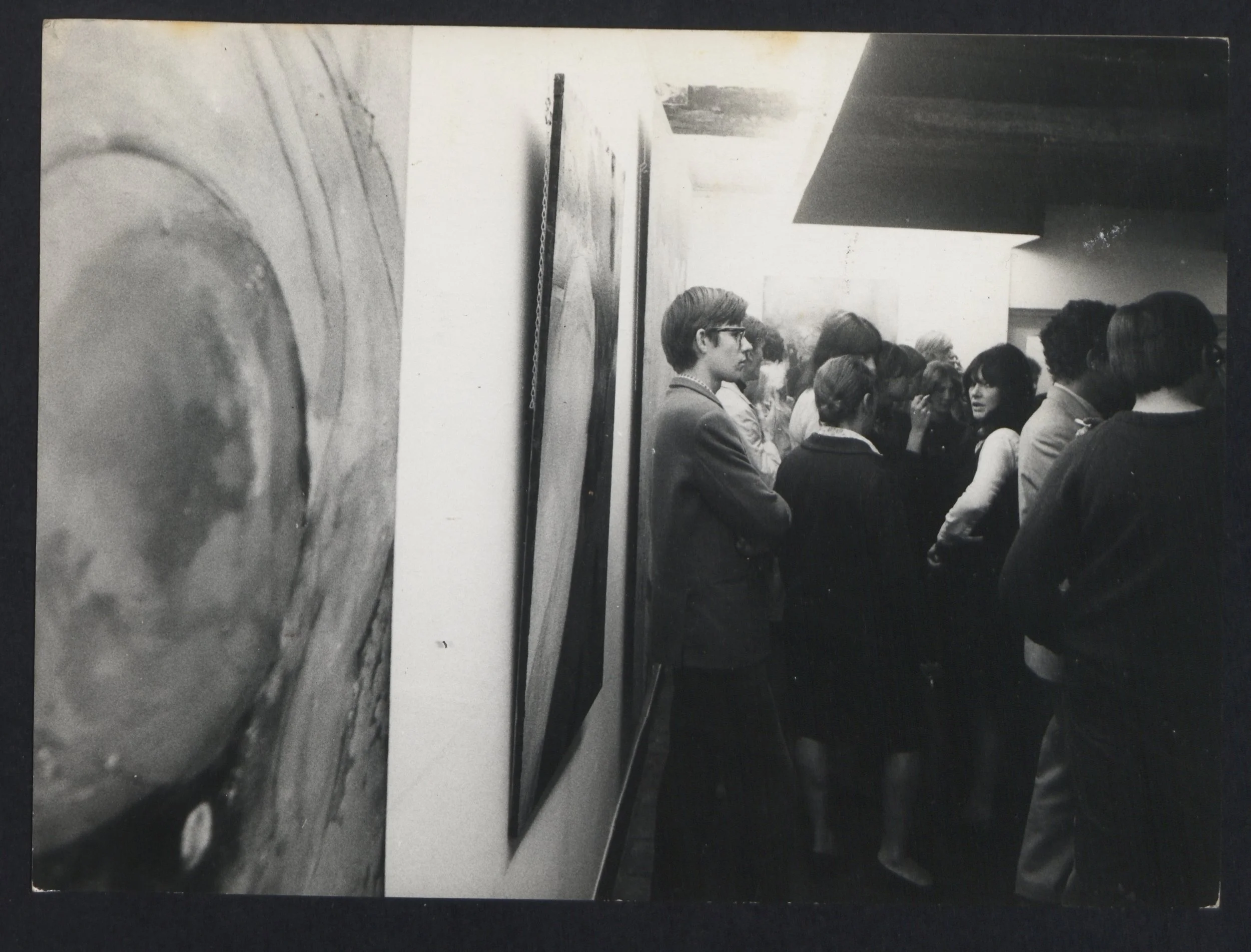
Photography exhibition at the Richard Foncke Gallery, Ghent, 1968. Photographer: Roland Van den Berghe.
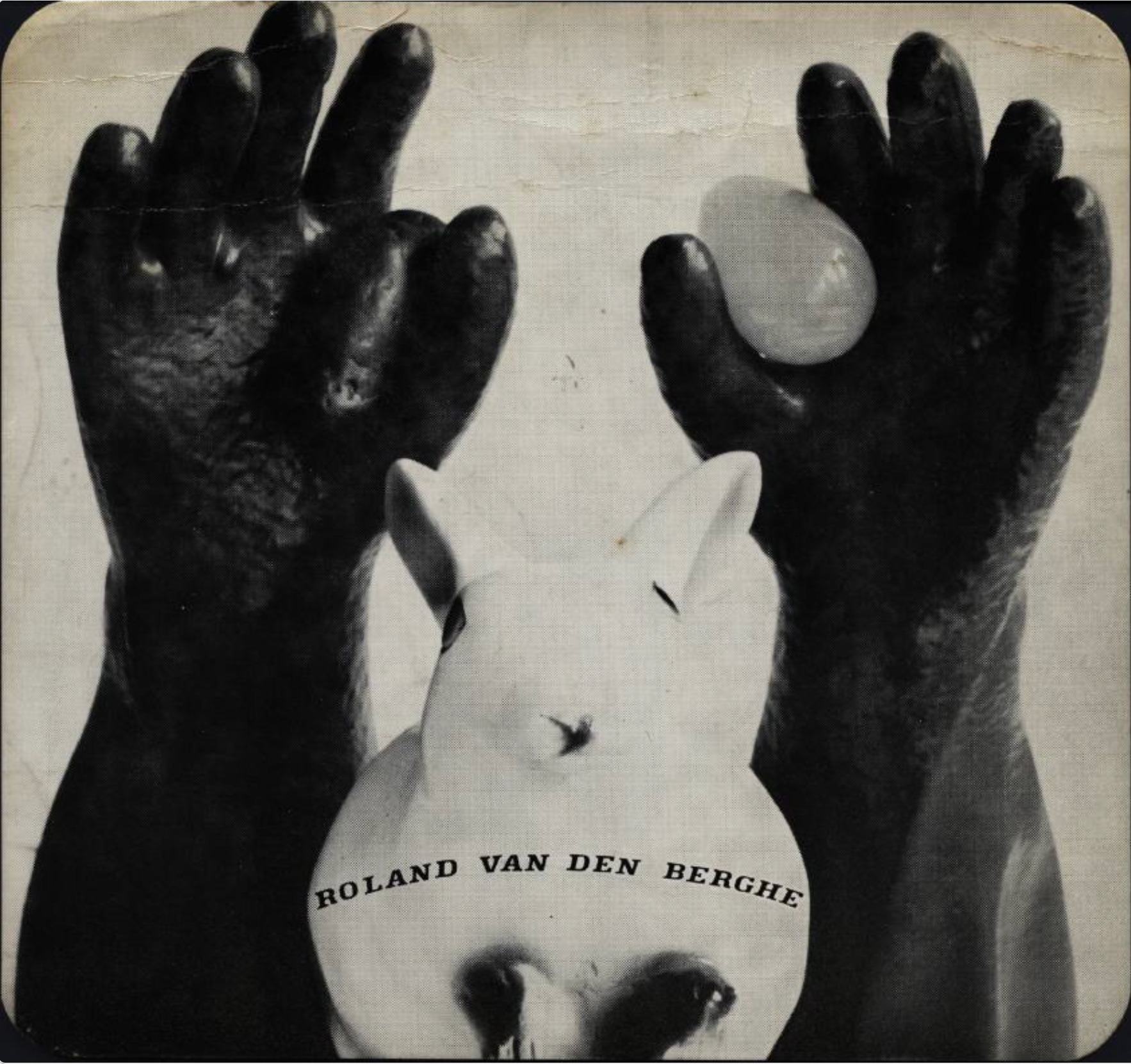
Invitation to Clysma, Ghent, 1968. Scan.
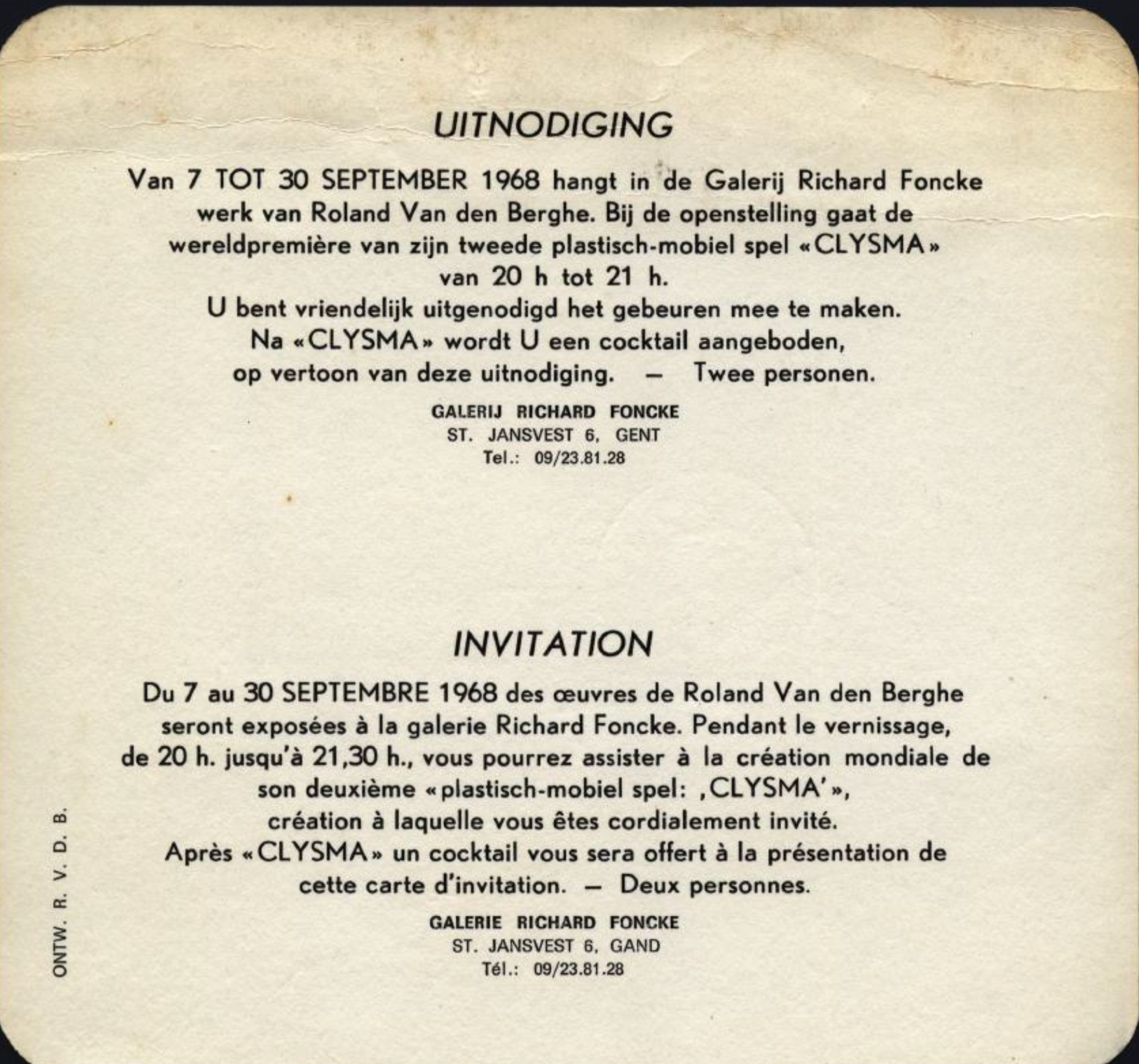
Invitation to Clysma, Ghent, 1968. Scan.
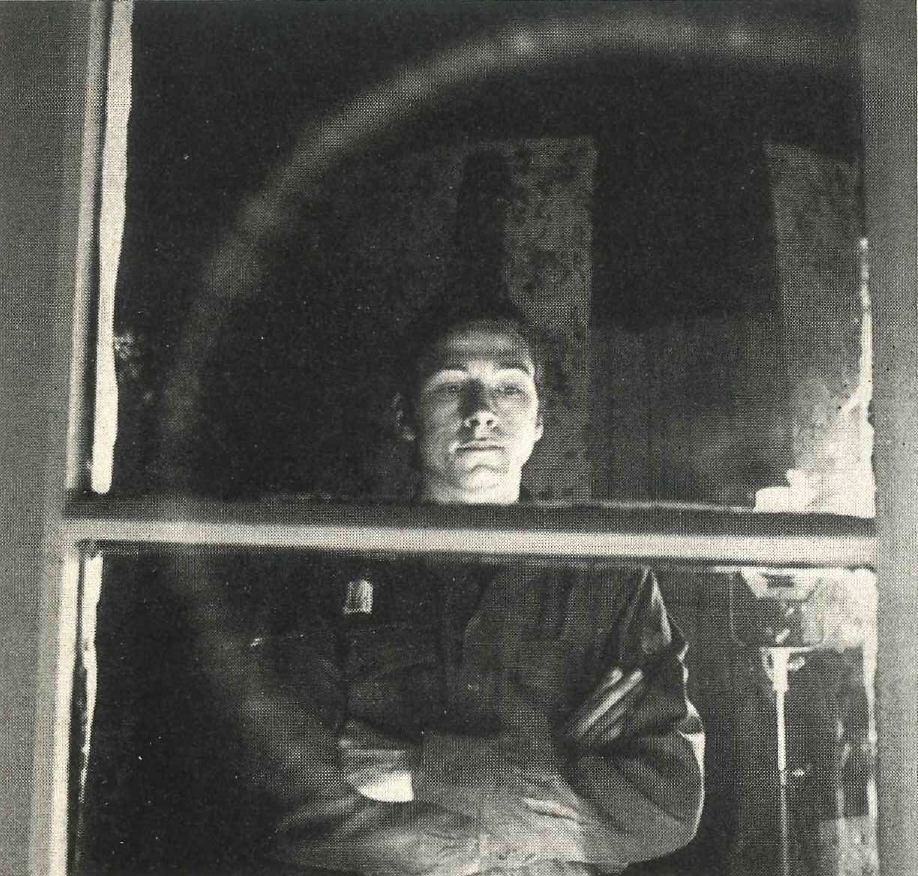
Photo of Roland Van den Berghe as a laborer, Clysma Total Theater, Ghent, 1968. Photographer unknown.
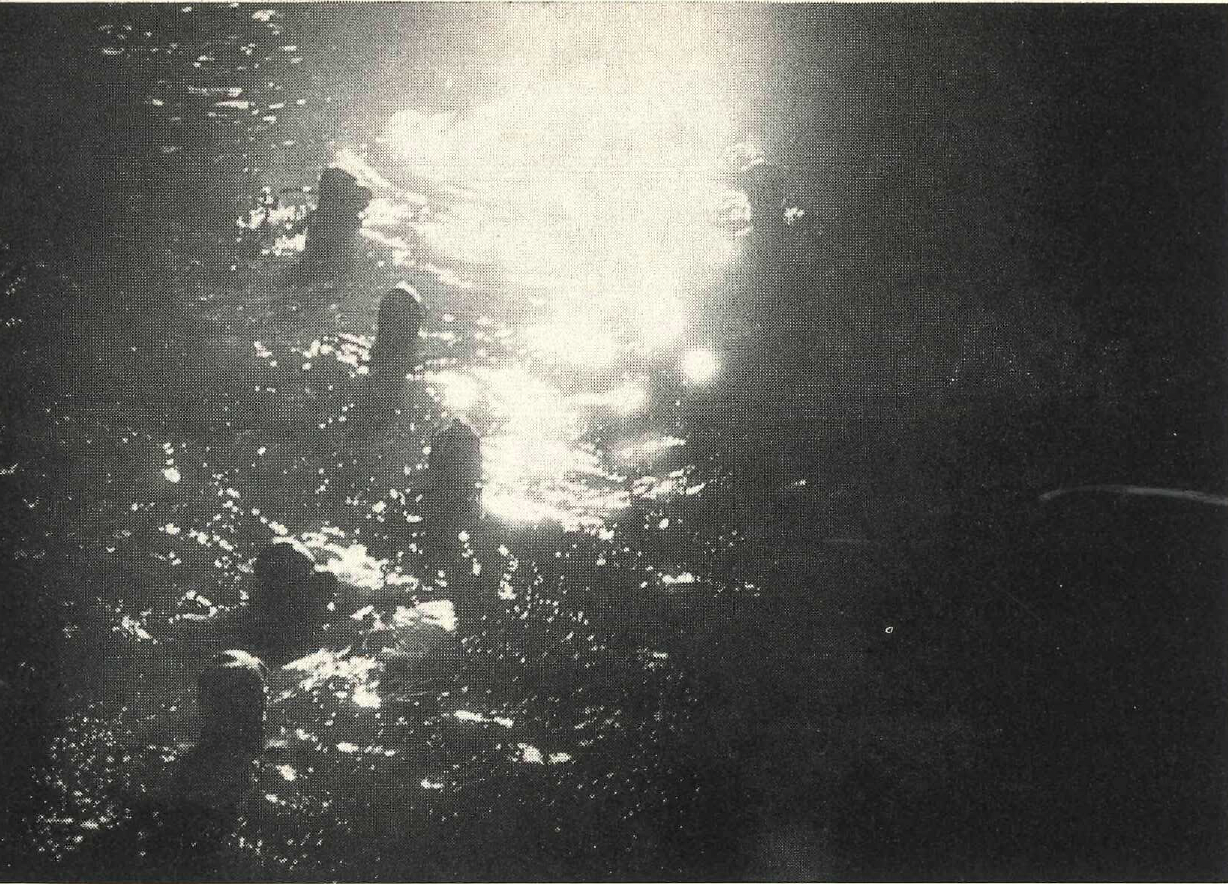
Photo of the Clysma Total Theater, Ghent, 1968. Photographer unknown.
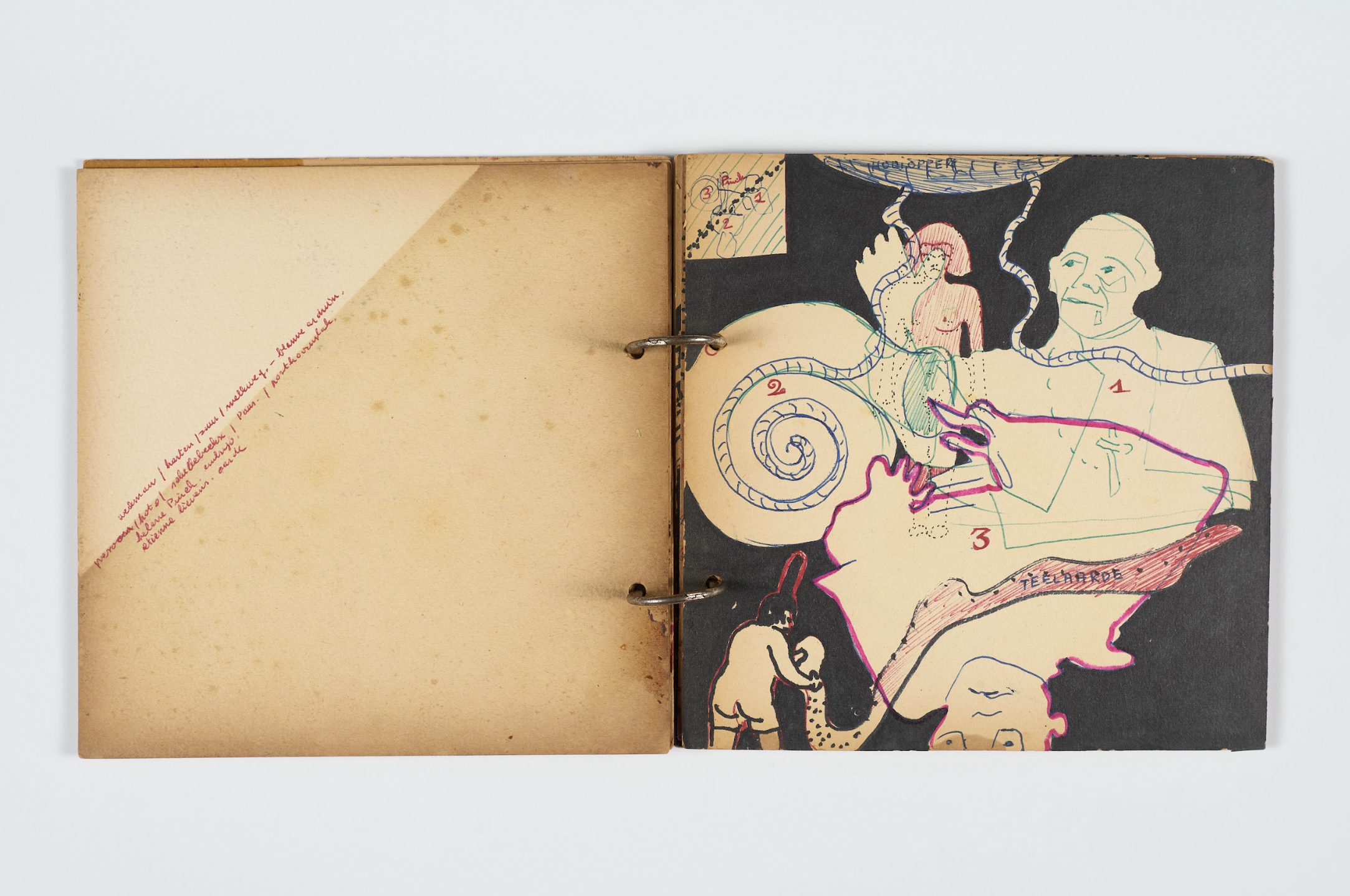
Design drawing for Clysma, Ghent, 1968.
Clysma
“From September 7 to September 30, 1968, works by Roland Van den Berghe were exhibited at the Richard Focke Gallery in Ghent; these works were distributed across the four galleries. The opening of this exhibition featured the premiere of his second plastic mobile play, titled Clysma, co-directed by Raphaël Opstaele.”
From: Invitation to Clysma, Roland Van den Berghe archive.
Just as with Clito, passersby and spectators are not allowed to participat in this total theater; it is a continuation of Roland Van den Berghe’s painting practice. It can be interpreted as a painting brought to life, revealing how the artist Roland Van den Berghe brings his work to life.
“Clysma means, if I may believe the play’s author, an enema. It happens as follows. After all the instruments and ingredients for the operation have been carefully assembled, performers and spectators will gather on the evening of September 7 at the Foncke Gallery on St.-Jansvest in Ghent. You should know that the gallery’s garden overlooks the connecting canal. The city council has been informed. In the garden stands a giant haystack seven meters high, into which mysterious water hoses disappear. These hoses run toward the canal and toward the gallery, and through the gallery out onto the street, toward Korte Dagsteeg and Brabantdam.
9:20 p.m. The lights in the gallery go out. Light streams into the hall from the hayloft. Twenty Boy Scouts stand in the light at the water’s edge. One Boy Scout is already busy installing emergency lighting in the hall. It all takes time. In front of the garden door, inside the hall, a young woman sits in a fetal position. Roland van den Berghe, the workman, sits unnoticed in the far corner of the hall. Wet frogmen in diving suits, complete with oxygen tanks, crawl between the legs of the audience. Van den Berghe begins breaking candy hearts, filled with sour filling for children, like communion wafers. He throws them into the audience. With the white sour liquid, he draws milky ways on the bluestone floor, across the shoes of the bystanders, the frogmen. He quietly moves closer to the crouching woman. The woman represents regularity, culture, protection, solid banking relationships, haystack, social security, the status quo, and stagnation. The woman now lies stretched out on the ground, amidst the timeless topicality of weekly magazines like Paris-Match, of which she is the embodiment. She is covered with an enormous butter stain. Through the grease, braids of her blonde wig—a halo of copper snakes—are drawn.
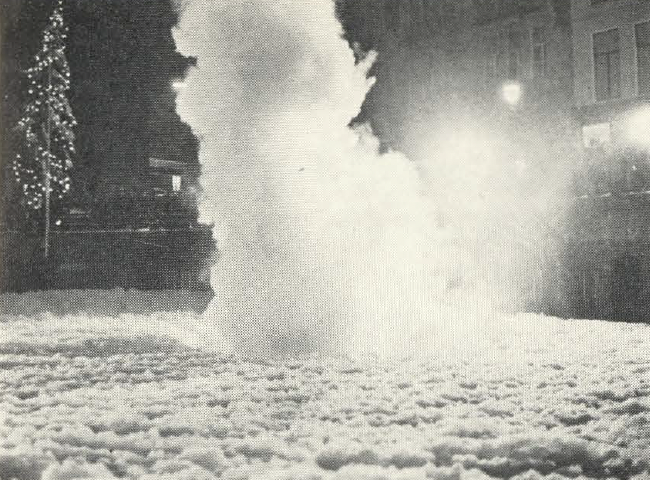
Totaaltheater Clysma, Gent, 1968, uit Museum Journaal, Revolutionaire mystiek, Rini Dippel.
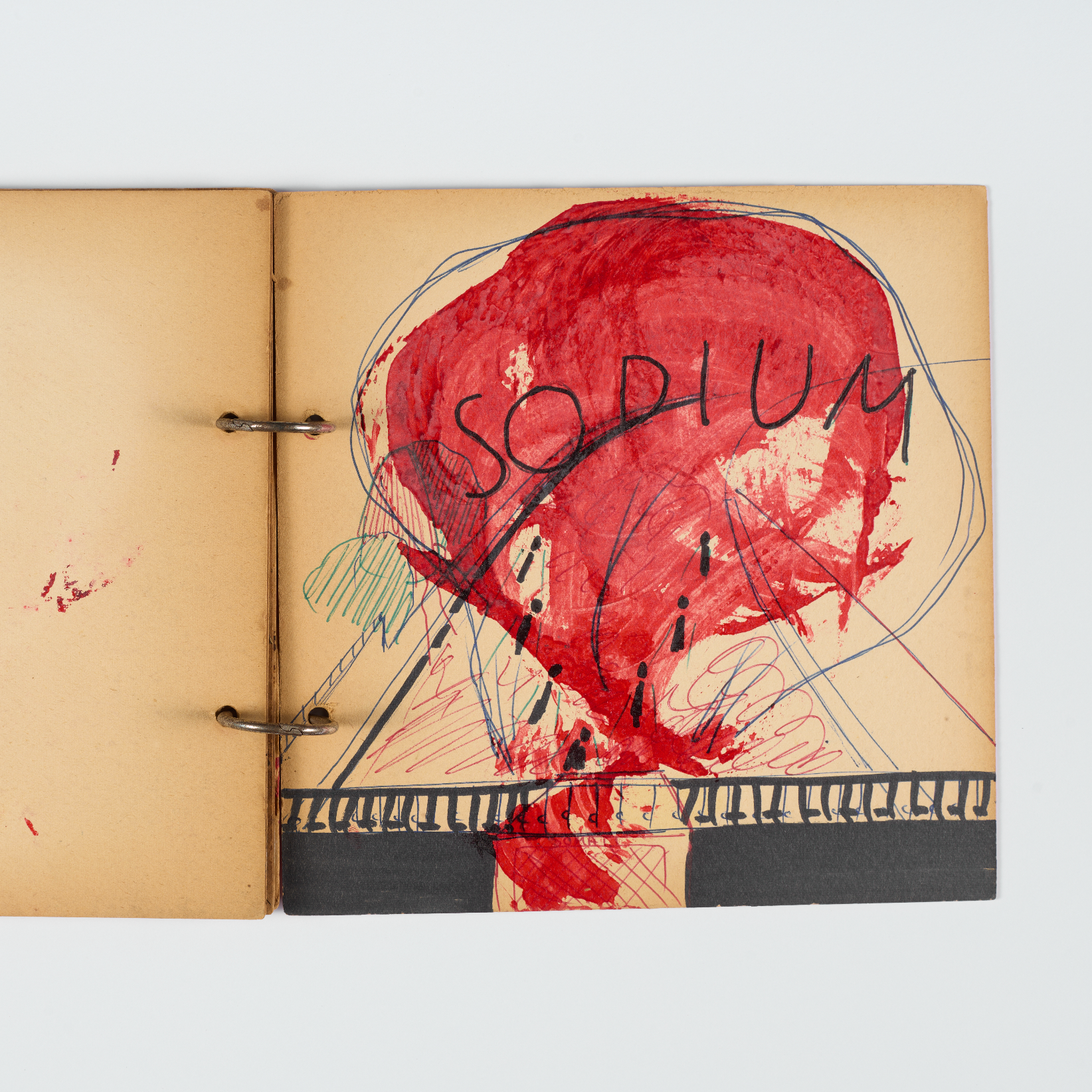
Page from a sketchbook, Clysma, 1968.
9:50 p.m. The water pump, hidden beneath the haystack, starts up. The Boy Scouts blow ultrasonic whistles. A second performer emerges from the garden and, from a backpack, scatters topsoil over the woman, into the gallery, onto the street, and toward the bridge. Meanwhile, the woman, the butter stain, and the soil are buried under a mass of foam. The woman is now standing upright. She commands the crowd: proceed to the bridge. There, the man with the potting soil is now busy wrapping the bridge railing.
10:10 p.m. A first formation of frogmen moves upstream through the canal in a V-shape to the area under the bridge, followed by a second, a third, and a fourth formation. Only their backs are visible above the water’s surface. Beams of light follow them.
10:15 p.m. Under the bridge, the frogmen stretch a net across the canal.
10:20 p.m. A monstrous machine spews a mass of foam onto the water’s surface from a 1-meter-diameter pipe. The foam slowly drifts toward the bridge, where it is held back by the crosswise net. There it piles up until it reaches above the bridge. Approximately 500 m³.
11:00 p.m. The frogmen positioned under the bridge dive beneath the mass and swim back in a V-formation until they disappear from the spectators’ view.
11:10 p.m. The machine is still spewing large amounts of foam onto the water, while 20 Boy Scouts, on the woman’s orders, throw SODIUM METAL rods into the middle of the canal. Upon contact with the water, a chemical reaction occurs, causing the floating rods to emit an orange, blue, and yellow light. Drifting with the current, they will illuminate the area beneath the foam for several minutes, creating a magnificent spectrum of colors.
11:20 p.m. Beneath the bridge, behind the wall of foam, a powerful fan kicks into operation, whipping up the large foam flakes.”
From: Clysma, Journal of Architecture and Visual Arts, no. 25, Geert Bekaert, pp. 634–638, 1968.
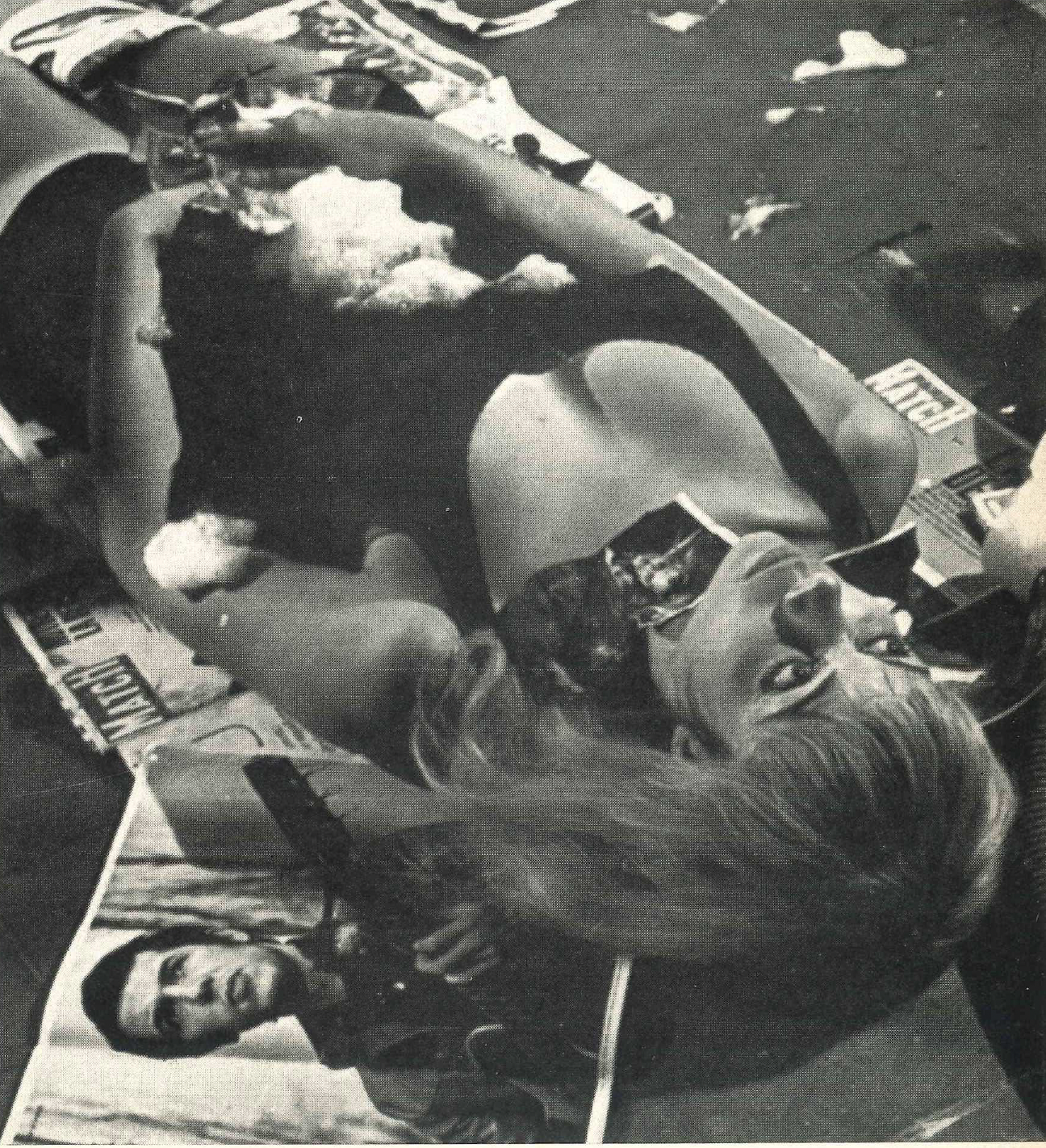
Helen Pinck at Totaaltheater Clysma in Ghent, 1968. Photographer: Fred Vandaele.
Timeline
1966–67
Studied the historical development of scenography in theater, opera, and film in Amsterdam and Berlin on a research grant from the Dutch Ministry of Education, Arts, and Sciences.
September 30 – October 6, 1967
Roland Van den Berghe was one of five “open-air” painters who created a work for the British Theater Week in Brussels. On Nieuwstraat in Brussels, Roland Van den Berghe composed a “tribute” to Magritte.
December 11–23, 1967
A group of artists coming together under the name Reportage, formed from an interuniversity exhibition.
May 30, 1968
Performance of Clito as part of the Dutch Days at the Palace of Fine Arts in Brussels.
May 31–June 8, 1968
Works by Roland Van den Berghe exhibited at the Defacqx Gallery.
July 11 – September 8
First Bruges Triennial.
September 7 – September 30, 1968
Works by Roland Van den Berghe exhibited at the Richard Foncke Gallery in Ghent. The opening of this exhibition featured the premiere of his second plastic mobile play titled Clysma.
December 21, 1968
Works at the home of Ulf Moritz.
December 27, 1968
Clysma performed in Utrecht on the Oude Gracht.
“The performances in Ghent and Utrecht differ from one another and can be viewed as two distinct Clysma happenings. The first difference is that in Ghent, the event takes place partly indoors and partly outdoors. In Utrecht, the entire event—sponsored by the Kargadoor—takes place outdoors, specifically in and around the Oude Gracht. The second difference concerns the central figures playing a role. In Ghent, a woman plays the central role, representing order, culture, protection, and the existing state of affairs. In Utrecht, a child wearing a pope’s mask appears, but this performance holds less significance than that of the woman in Ghent. ”
From: Artist Without a Party, Wouter Kotte.
January 17–31, 1969
Works at Galerie Fitzroy.
“Sien and Ulf,” one of the works exhibited at the Richard Foncke Gallery in Ghent, from the S.M.A.K. collection.