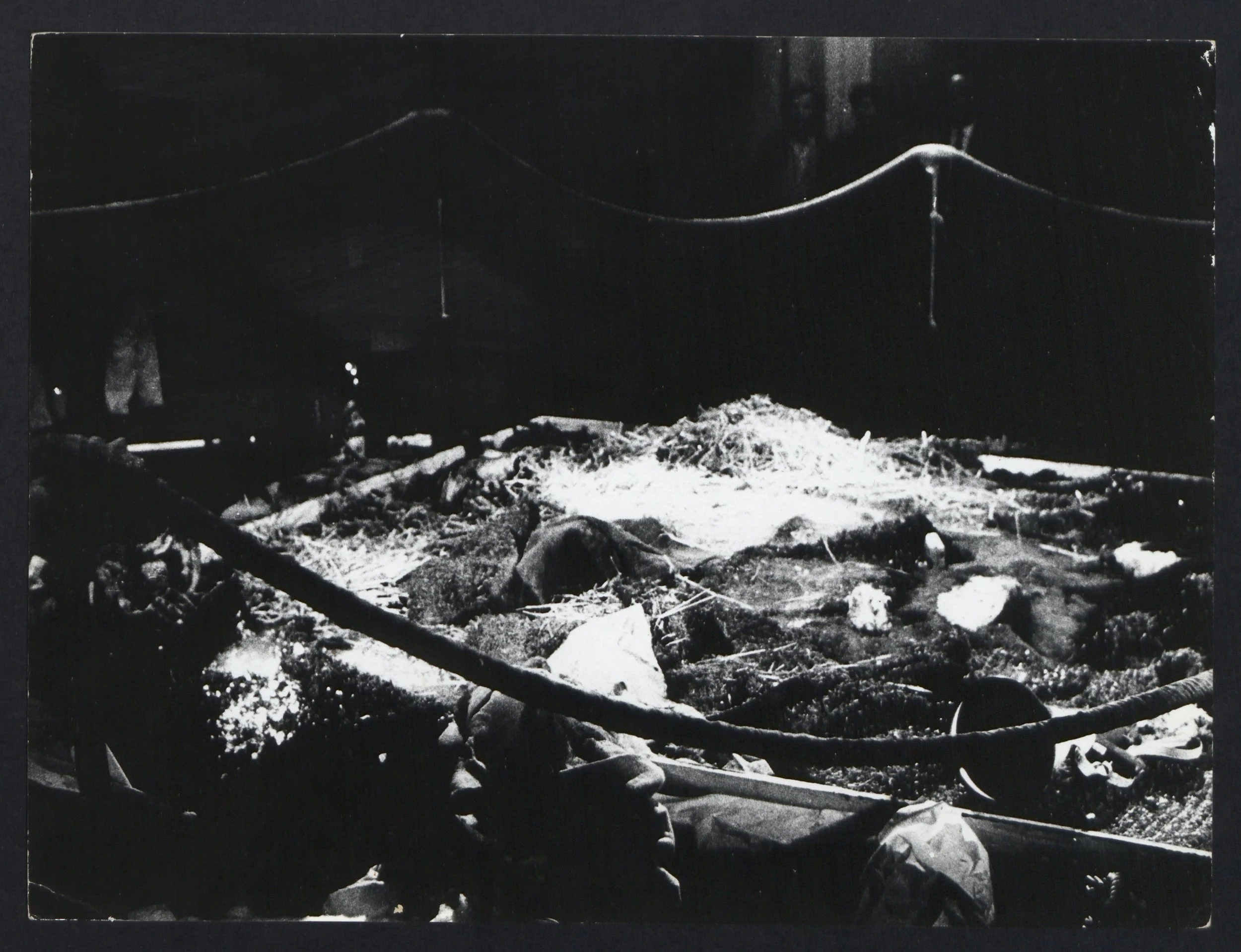
Photo of the Clito Total Theater, Brussels, 1968. Photographer unknown.
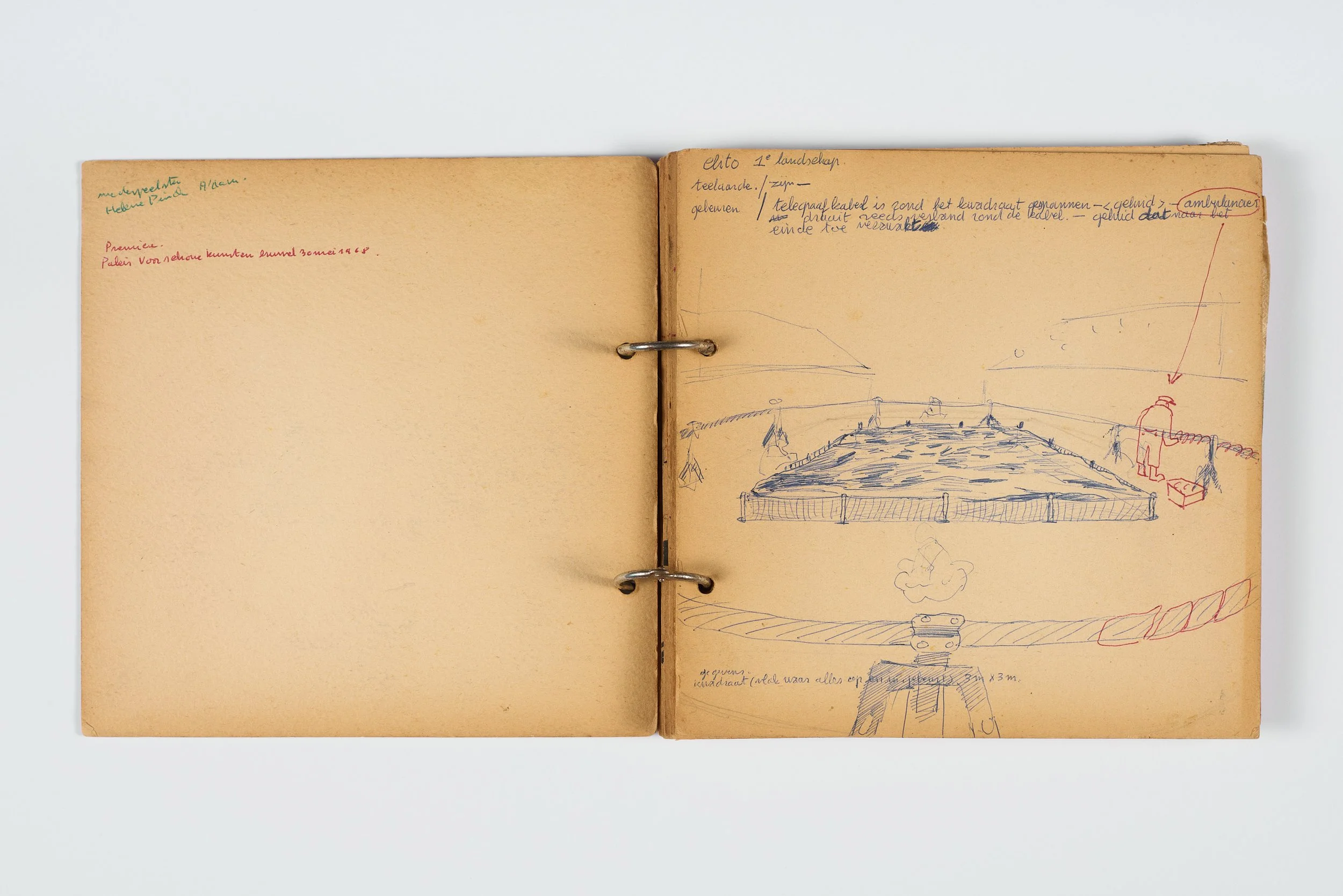
Design sketch for Clito, 1968.
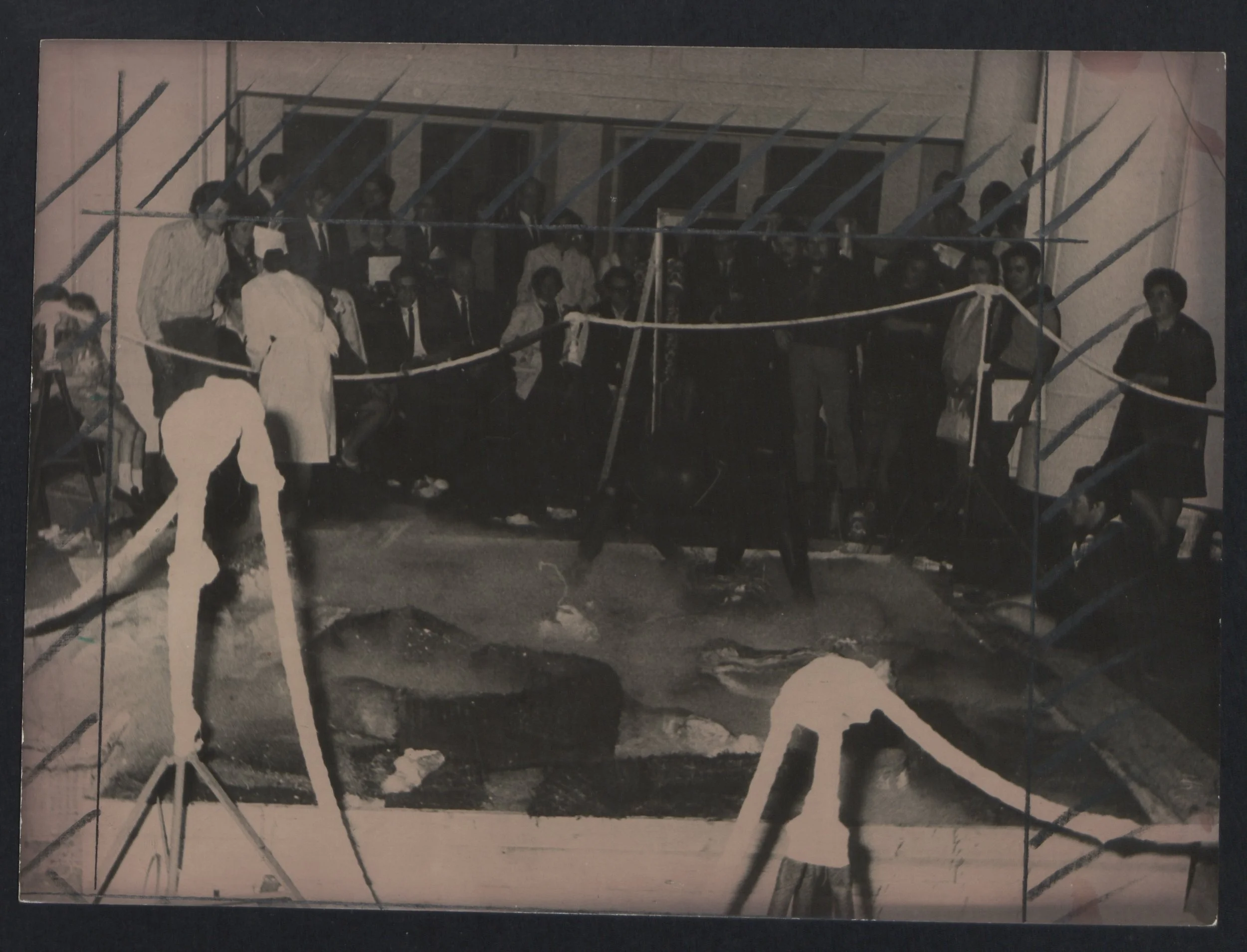
Photo of the Clito Total Theater, Brussels, 1968. Photographer unknown.
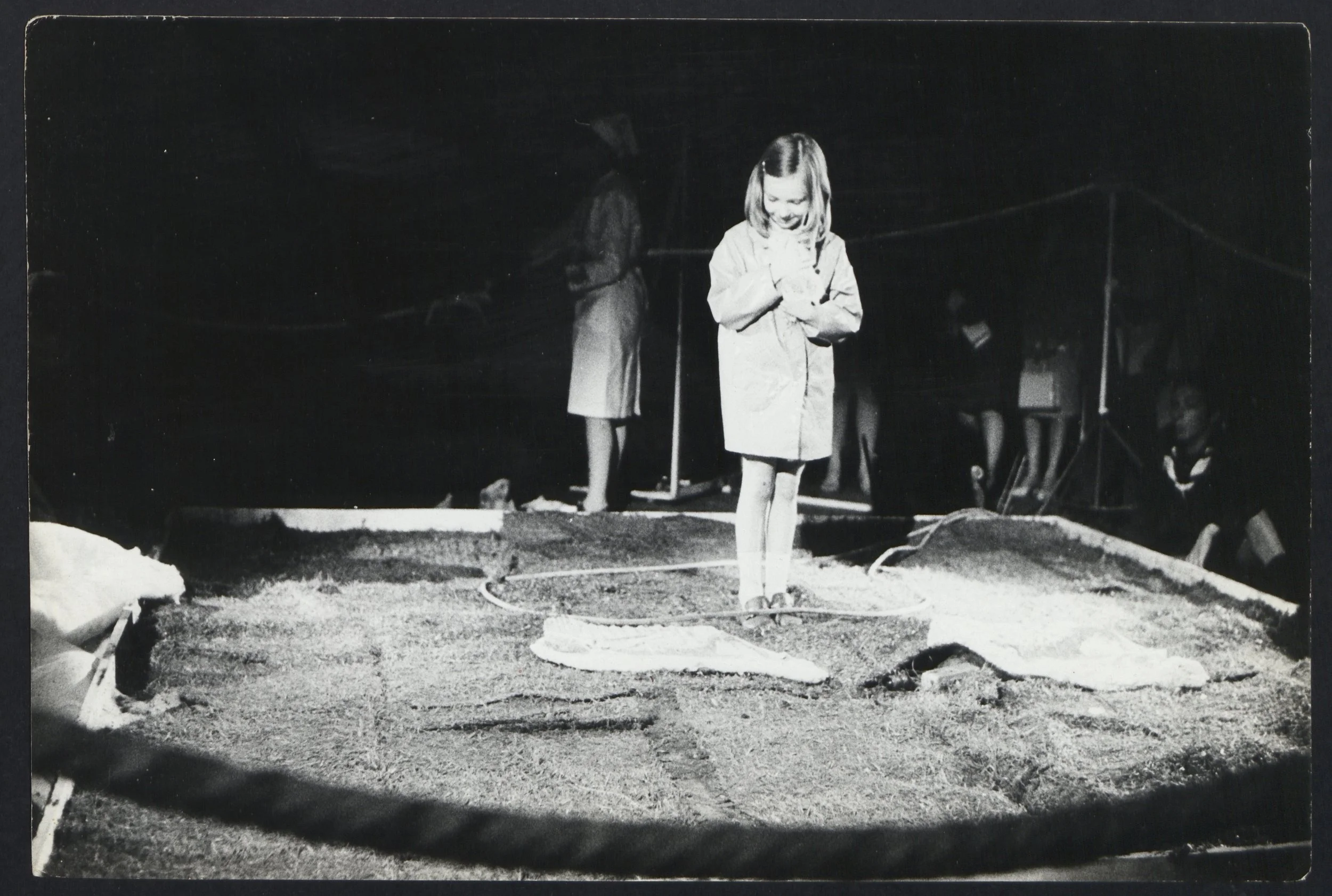
Photo of the Clito Total Theater, Brussels, 1968. Photographer unknown.
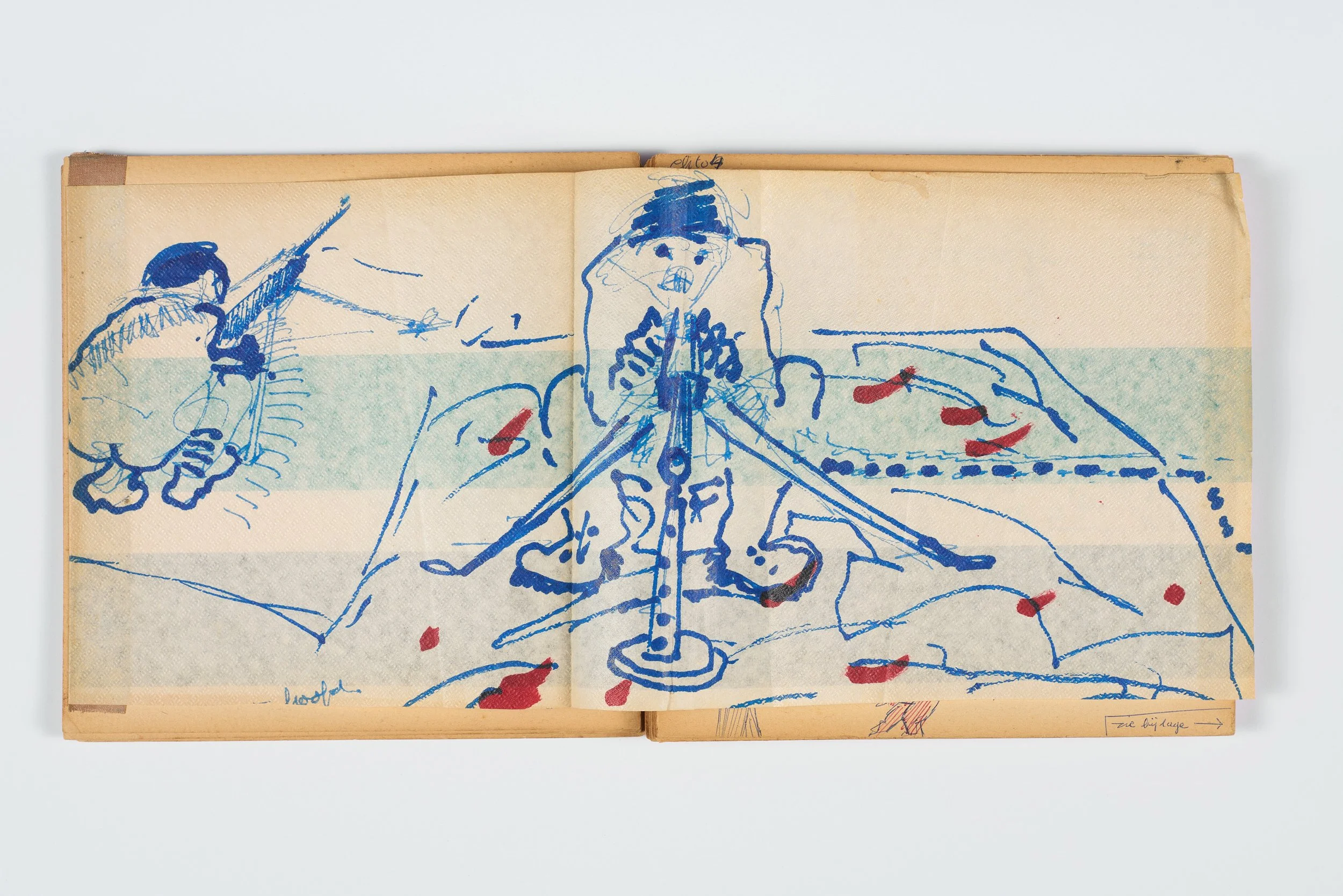
Design sketch for Clito, 1968.
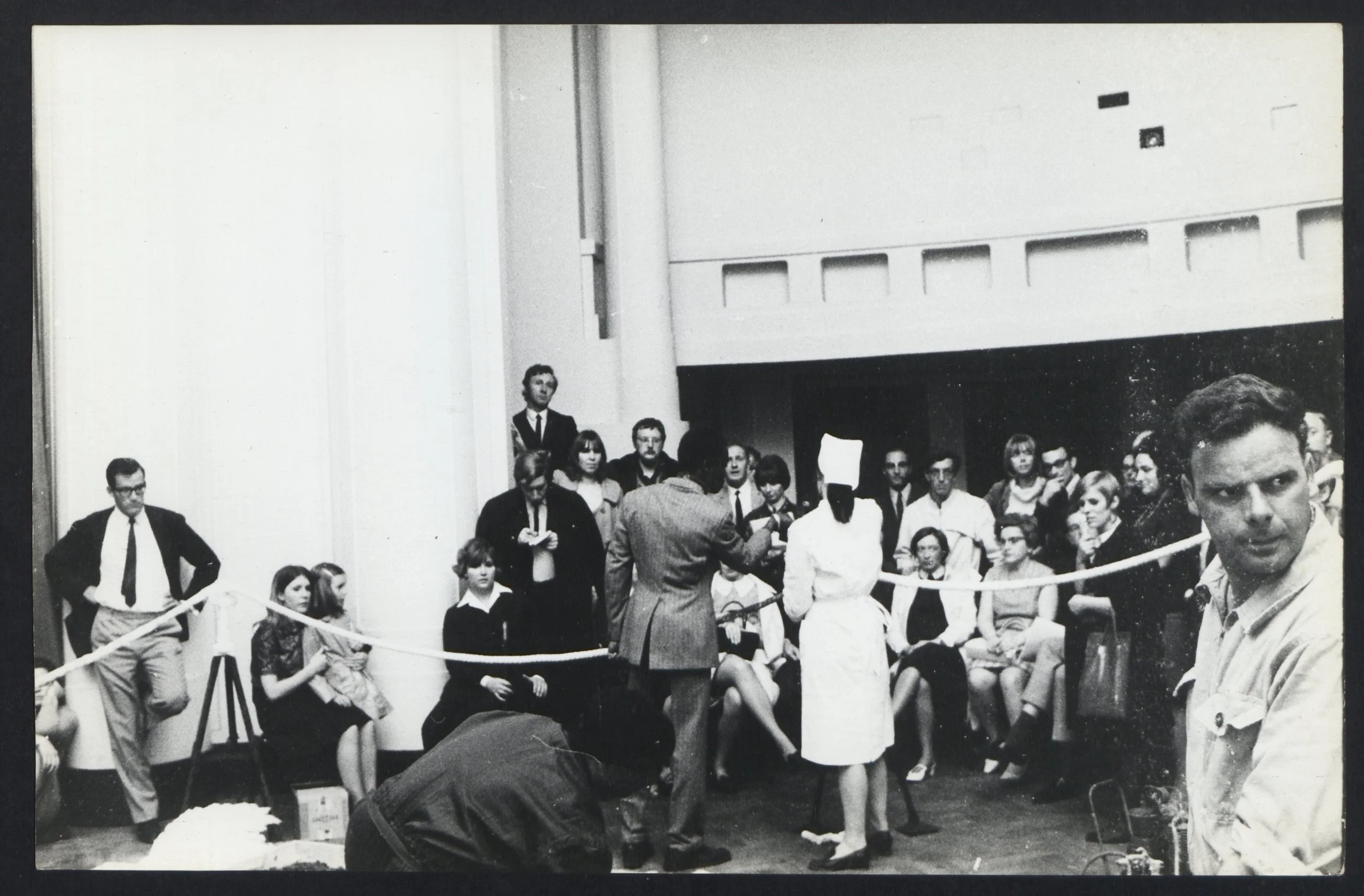
Photo of the Clito Total Theater, Brussels, 1968. Photographer unknown.
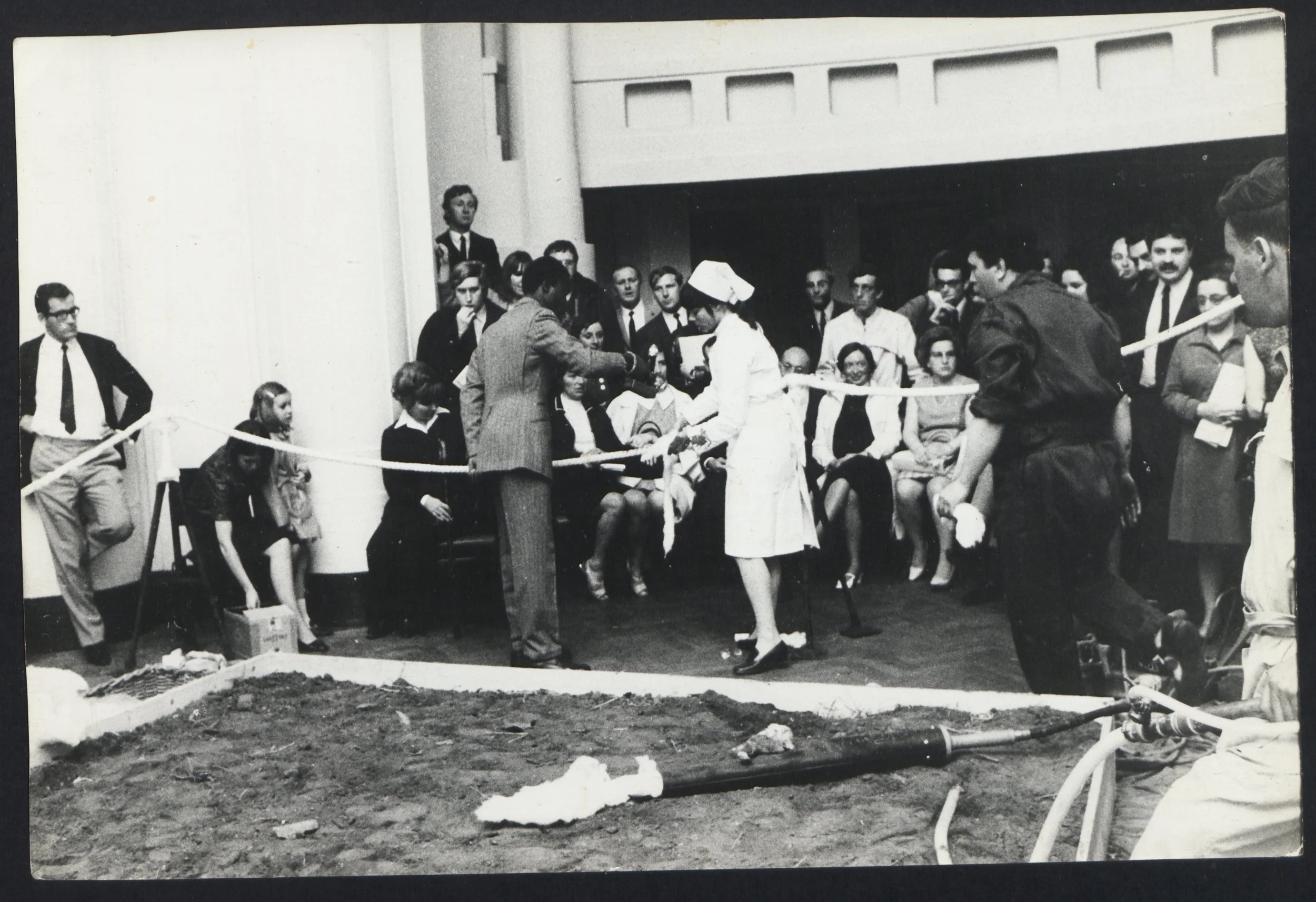
Photo of the Clito Total Theater, Brussels, 1968. Photographer unknown.
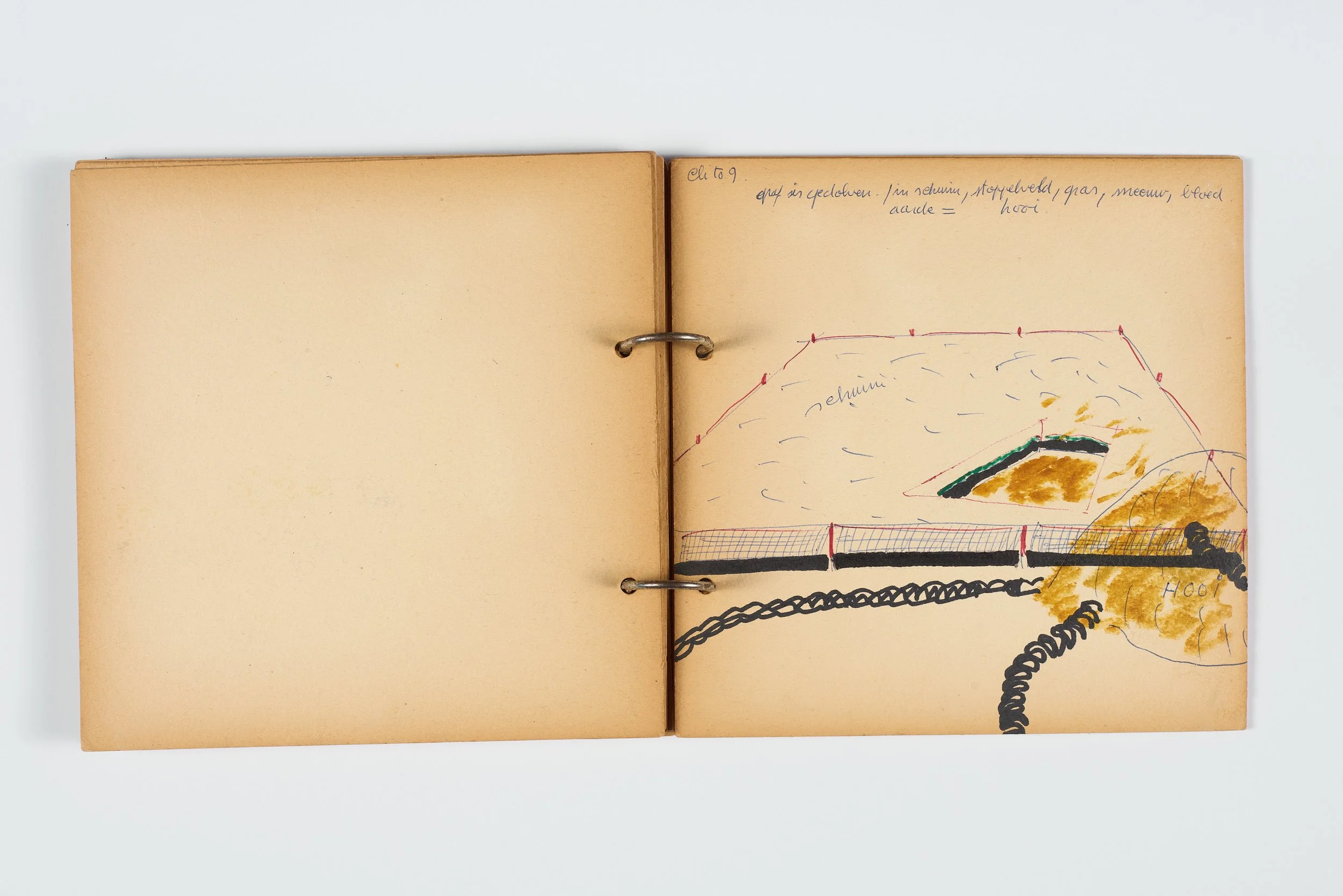
Design sketch for Clito, 1968.
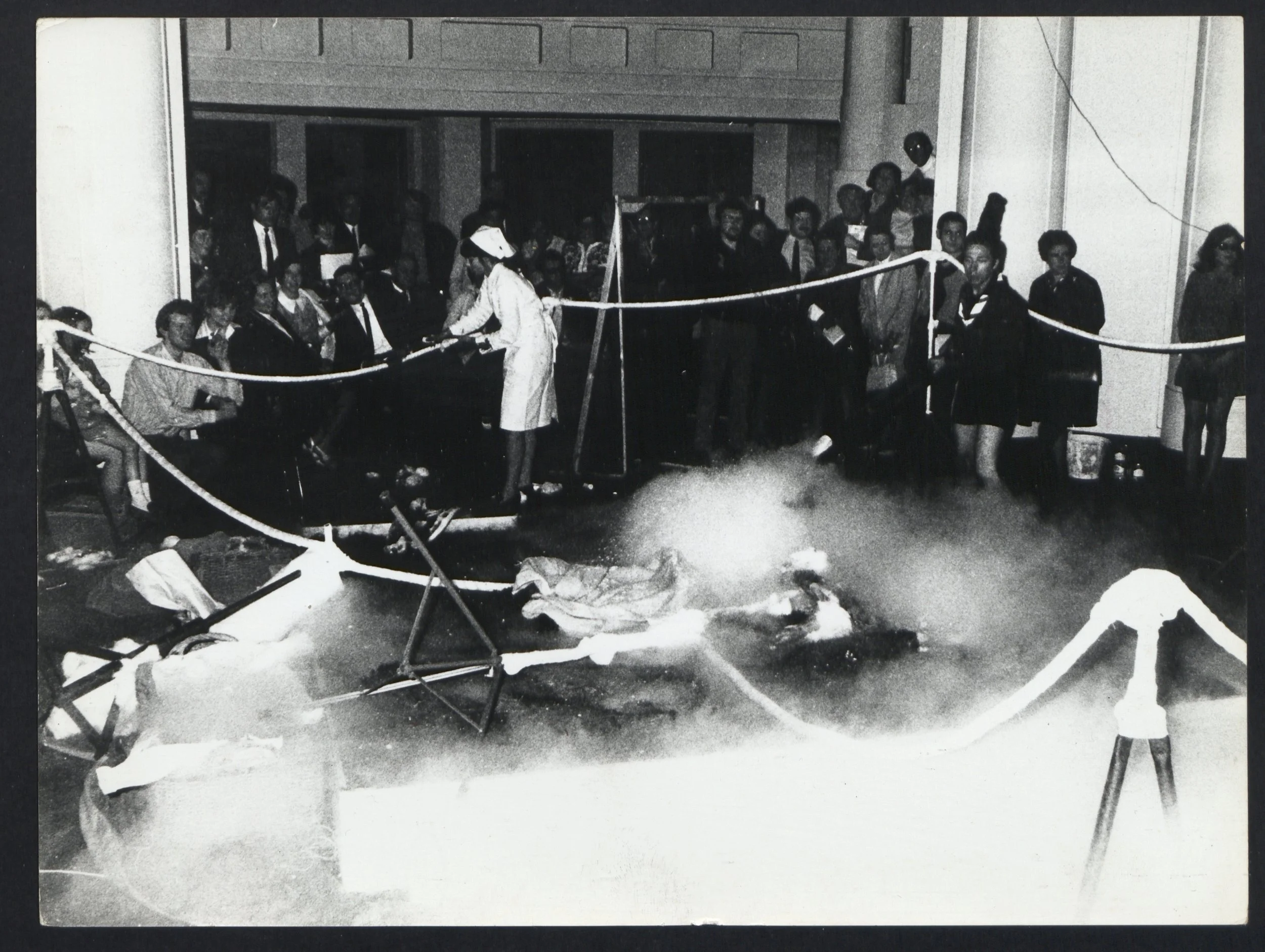
Photo of the Clito Total Theater, Brussels, 1968. Photographer unknown.
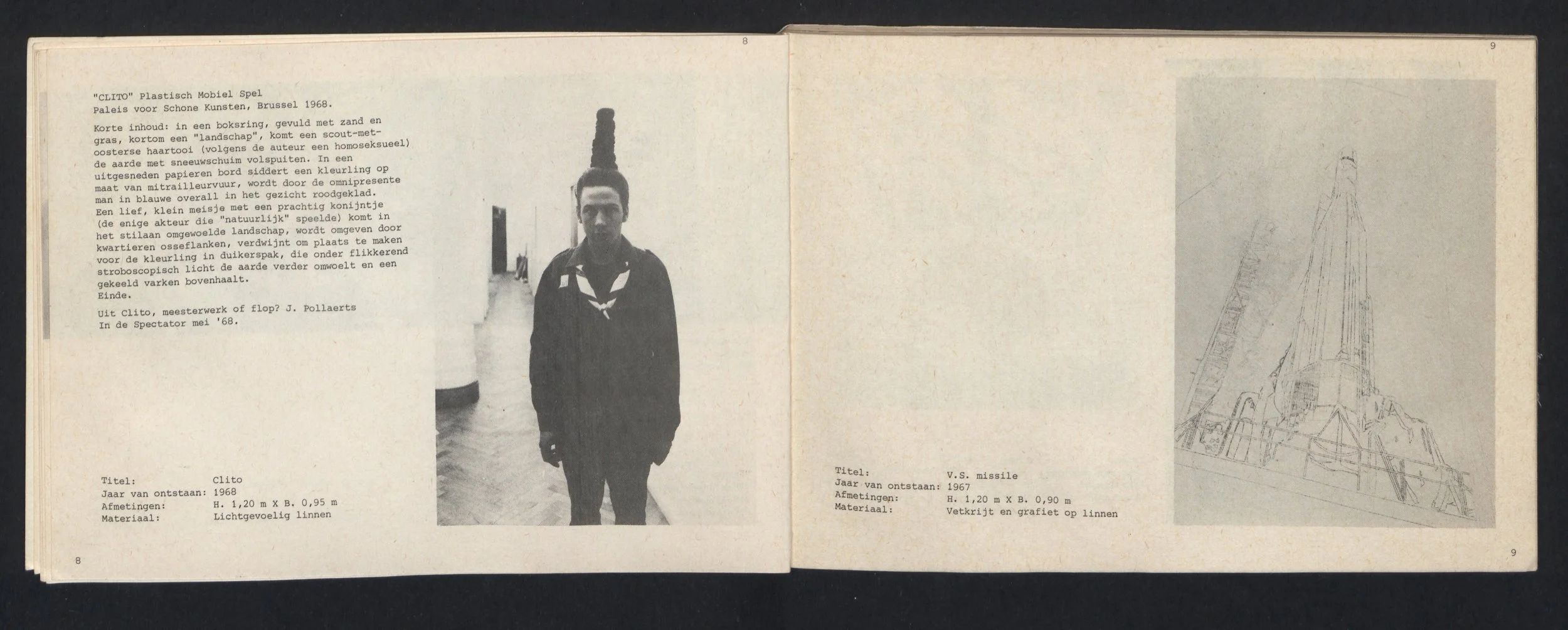
Publicatie Phoenix or Eagle, which?, 1973.
Clito
“In 1968, Van den Berghe developed two mobile plays titled Clito and its sequel Clysma, directed by Raphael Opstaele. Both of these sculptural mobile plays aim to make people more aware of their situation as human beings: first and foremost as individuals, as living beings, and secondarily as members of a community, as links—at whatever level—in an organization, an organization that shapes them and through which they are shaped. It thus becomes clear that Van den Berghe’s works should not be approached on purely aesthetic grounds, but rather that they must be considered on the basis of their raison d’être.”
From: Verantwoording, H. Bex-Verscharen, Roland Van den Berghe Archive.
“In the middle of a completely darkened room stood a square sandbox. From the gallery, sirens and electronic sounds echoed, giving the space a charged, almost oppressive atmosphere. Then a young man stepped forward, dressed as a Boy Scout and sporting a striking hairstyle at least twenty centimeters high. With a noisy spray device, he covered the sand with white foam spots, while the infernal sound of the machine filled the space.
At the edge of the stage hung a frame stretched with white paper. This was completely smeared with red paint, after which a Senegalese performer made convulsive movements within it. His body was then also covered in red paint, creating an intense tableau that did not spare the audience: splashes of paint reached the crowd.
For the second scene, red sods of grass were laid side by side and then painted green. A little girl, smiling shyly and holding a rabbit in her arms, stood in the middle of this artificial landscape. Once again, the silence was broken by the noise of the same spray machine, which in a matter of seconds filled the entire hall with a thick white mist. Another tableau.
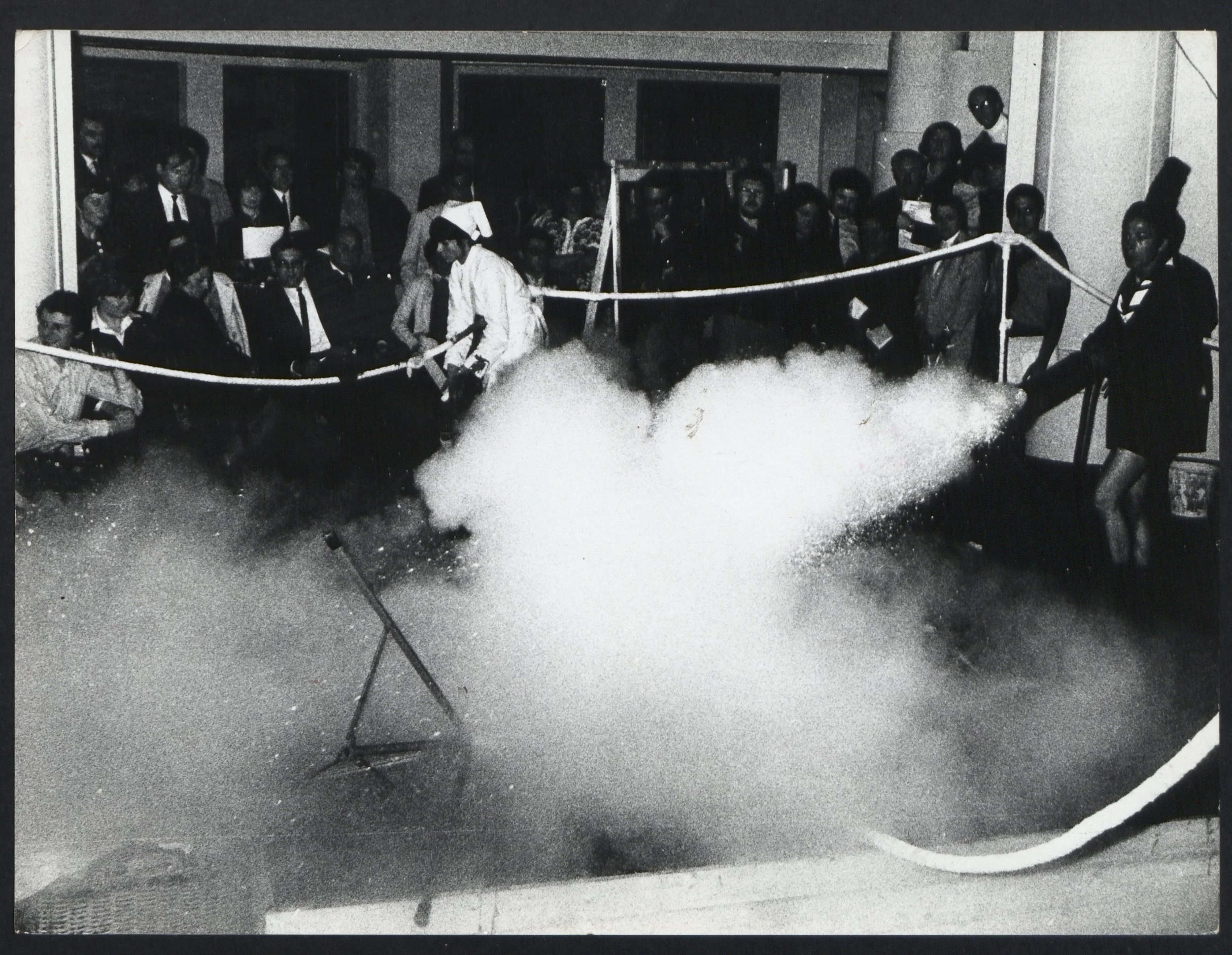
Photo of the Clito Total Theater, 1968. Photographer unknown.
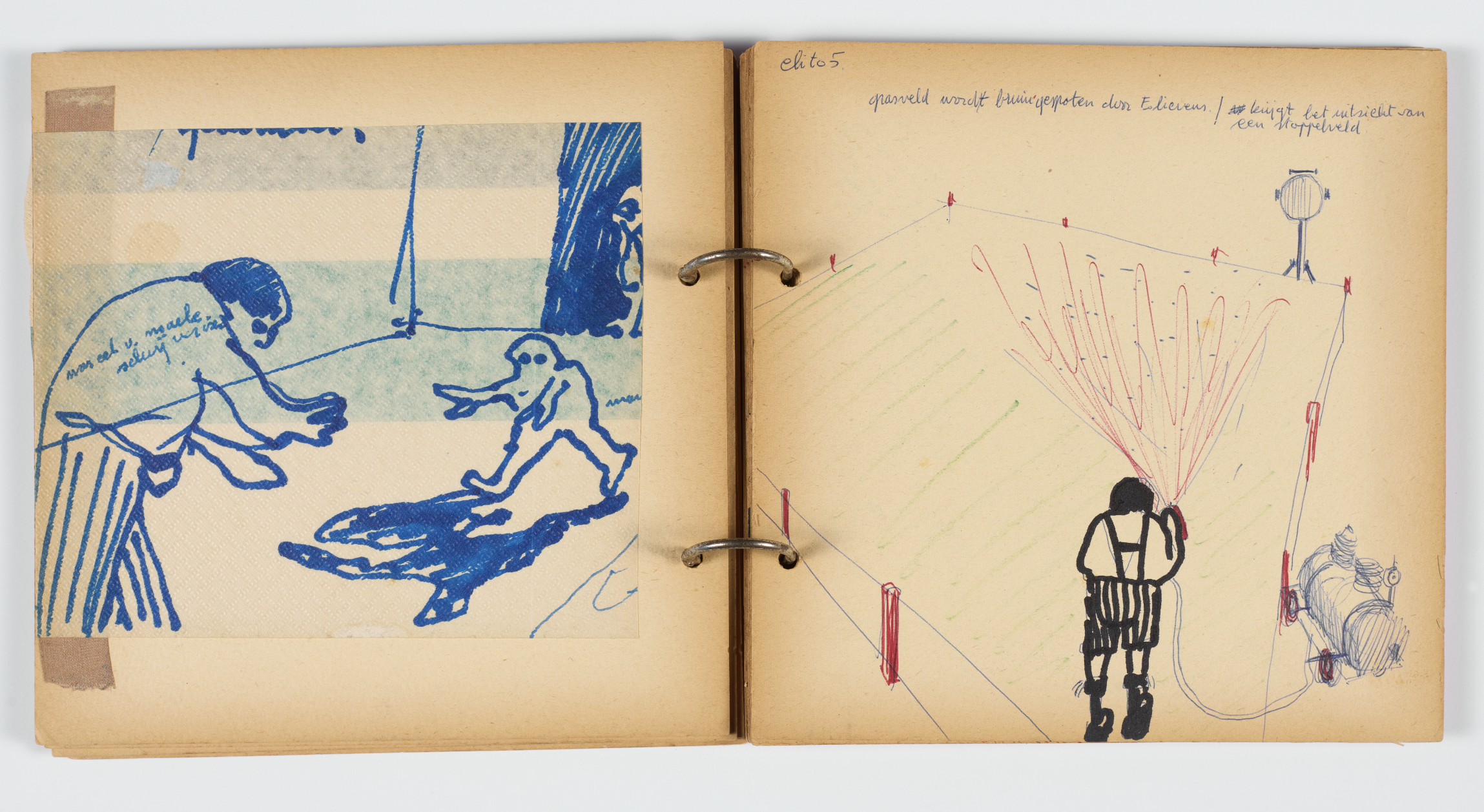
Page from a sketchbook, Clito, 1968.
This work unfolds in nine phases, a clear reference to the nine months of pregnancy. The four seasons are interwoven throughout these phases. In the model Van den Berghe designed for the work, the nine situations are arranged in a 3×3 grid: earth, snow, fog, brown grass, green grass, and even the funeral of a pig. The whole forms a symbolic cycle in which life and death are no longer opposing poles, but flow into one another.
During the performance, every possible telephone sound is used: dial tone, ringing, busy signal, international calls, and even taxi calls from Brussels. Parallel to this, an imaginary tropic is wrapped in gauze, which is unwound again during the blackouts. Objects placed in the wrappings by the audience or performers fall to the floor, forming a circular relief, a sort of lunar crater. This creates a layered whole in which matter, sound, ritual, and symbolism constantly intertwine.”
From: Revolutionary Mysticism, by Rini Dippel in Museumjournaal, series 15, no. 5, November 1970.
Timeline
1966–67
With a research grant from the Dutch Ministry of Education, Arts, and Sciences, he studied the historical development of scenography in theater, opera, and film in Amsterdam and Berlin.
September 30 – October 6, 1967
Roland Van den Berghe is one of five “open-air” painters who created a work for the British Theater Week in Brussels. On Nieuwstraat in Brussels, Roland Van den Berghe composed a “tribute” to Magritte.
December 11–23, 1967
A group of artists coming together under the name Reportage, formed from an interuniversity exhibition.
May 30, 1968
Performance of Clito as part of the Dutch Days at the Palace of Fine Arts in Brussels. This performance took place at the Palace of Fine Arts in Brussels, in the Rotunda Hall.
May 31 – June 8, 1968
Works by Roland Van den Berghe exhibited at the Defacqx Gallery.
July 11 – September 8
First Bruges Triennial.
September 7 – September 30, 1968
Works by Roland Van den Berghe exhibited at the Richard Foncke Gallery in Ghent. The opening of this exhibition featured the premiere of his second plastic mobile play, titled Clysma.
December 21, 1968
Works at the home of Ulf Moritz.
December 27, 1968
Clysma performed in Utrecht on the Oude Gracht.
Photo of the Clito Total Theater, 1968. Photographer unknown.