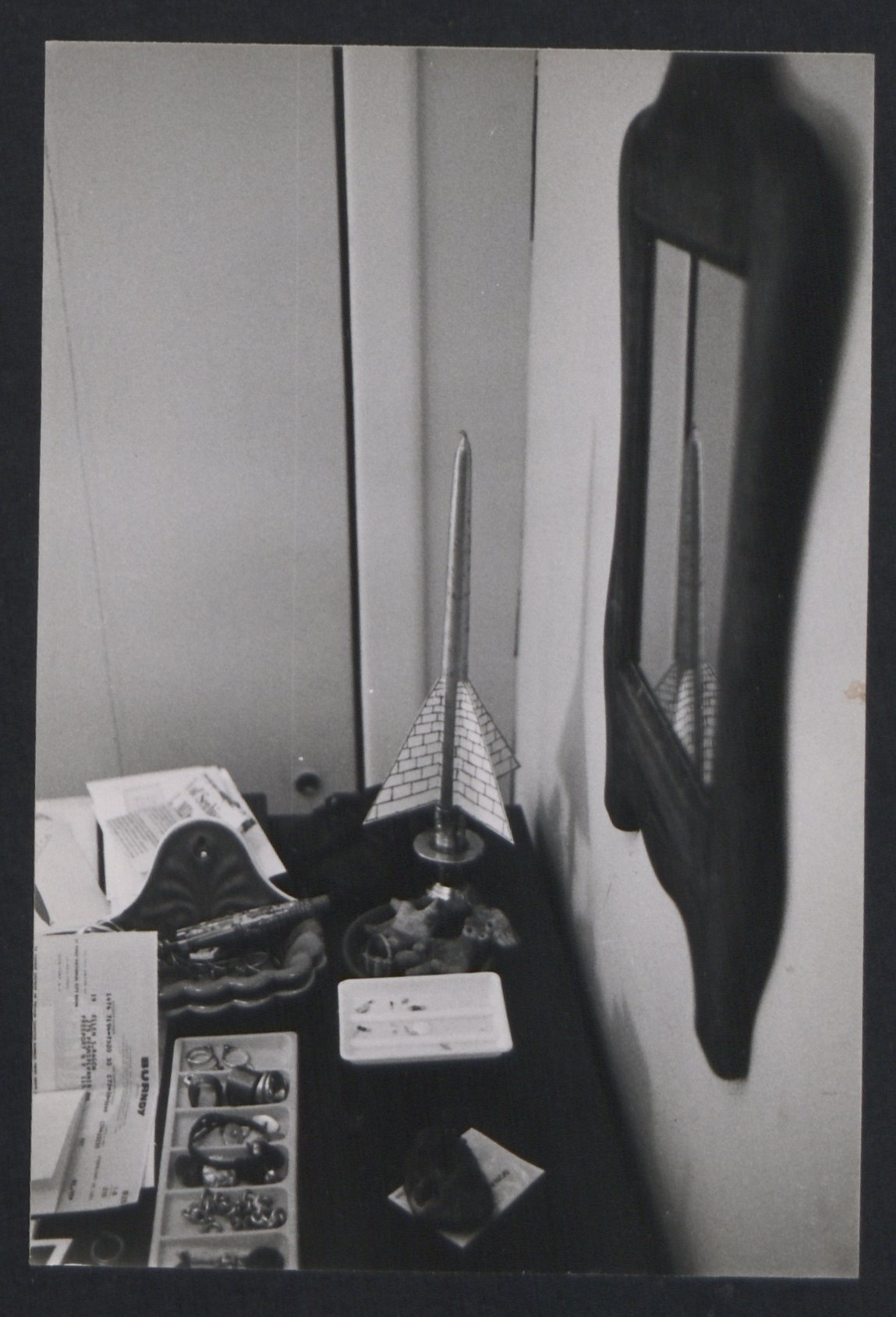
Photo: Cooper Union, New York, 1975. Photographer: Roland Van den Berghe.
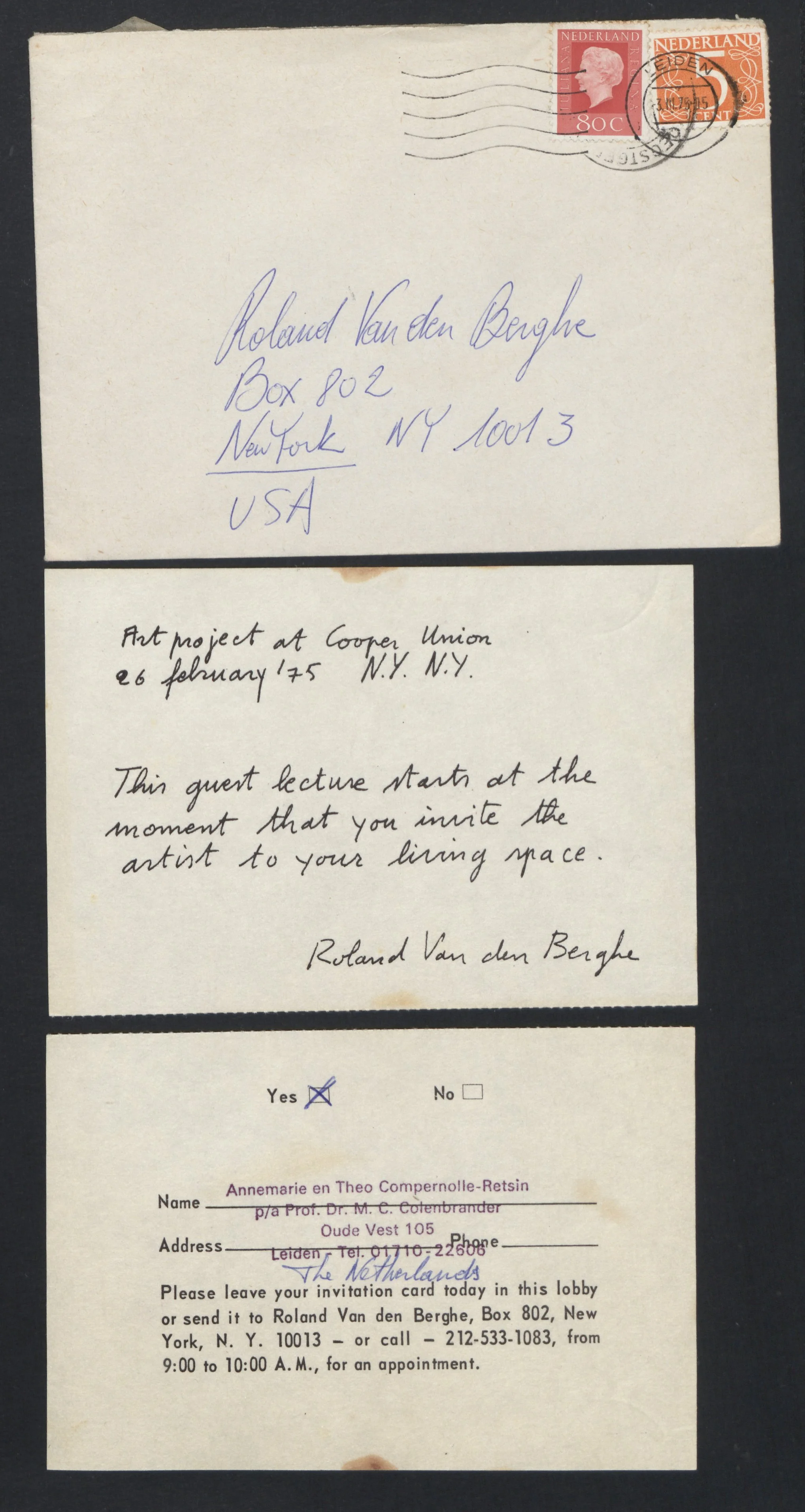
Invitation from Cooper Union, New York, 1975.
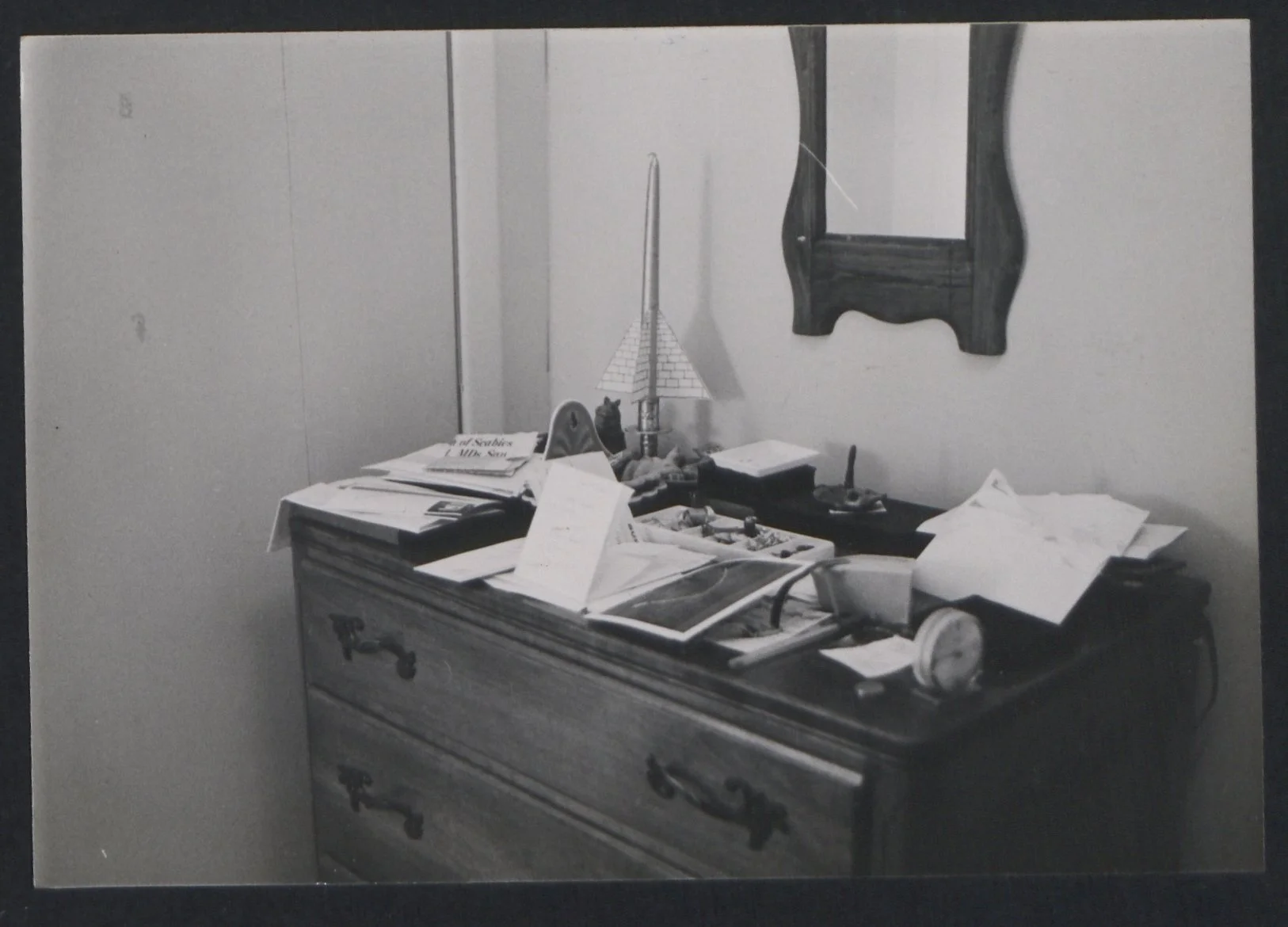
Photo Cooper Union, New York, 1975. Photographer Roland Van den Berghe.
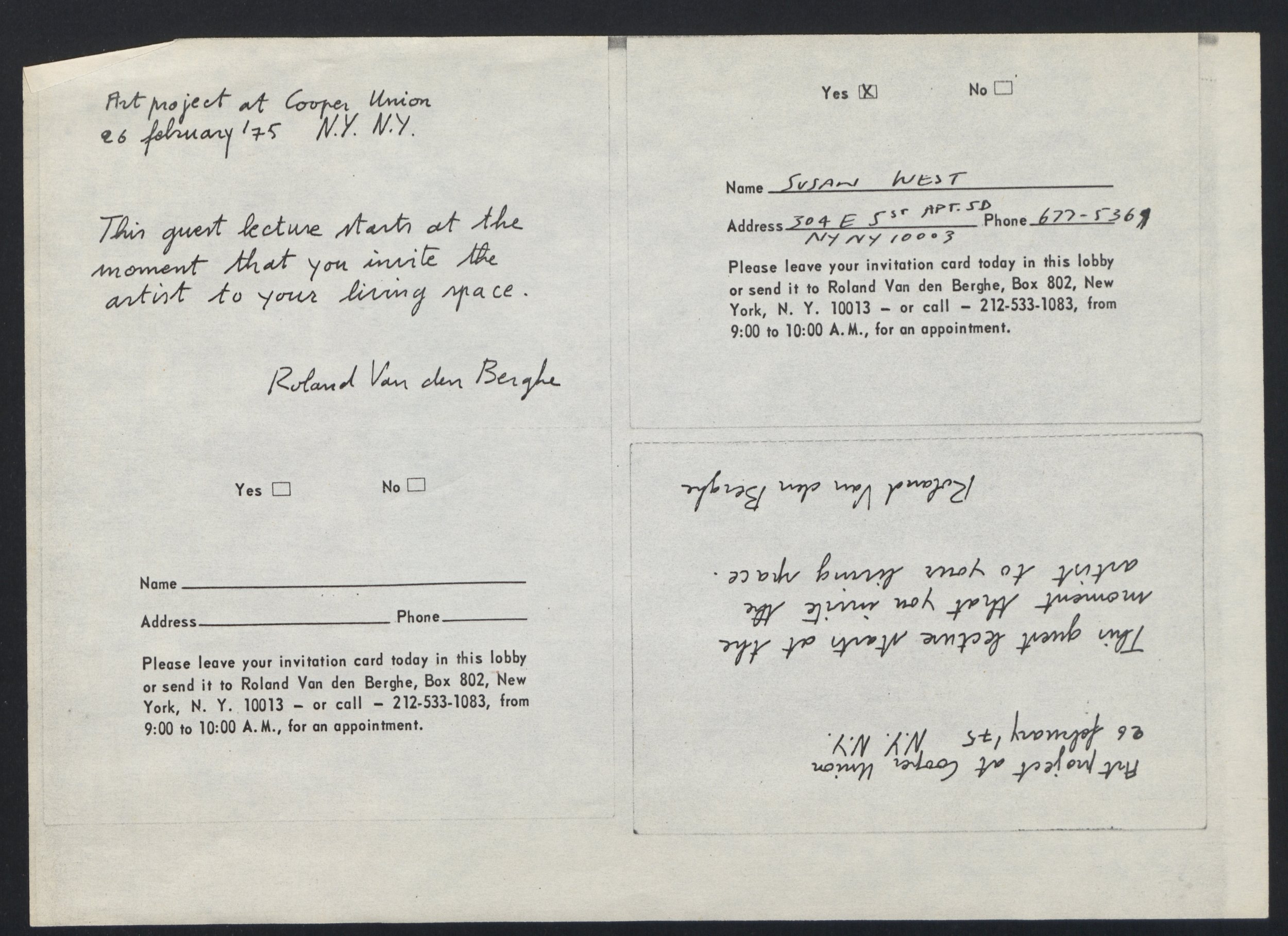
Invitation from Cooper Union, New York, 1975.
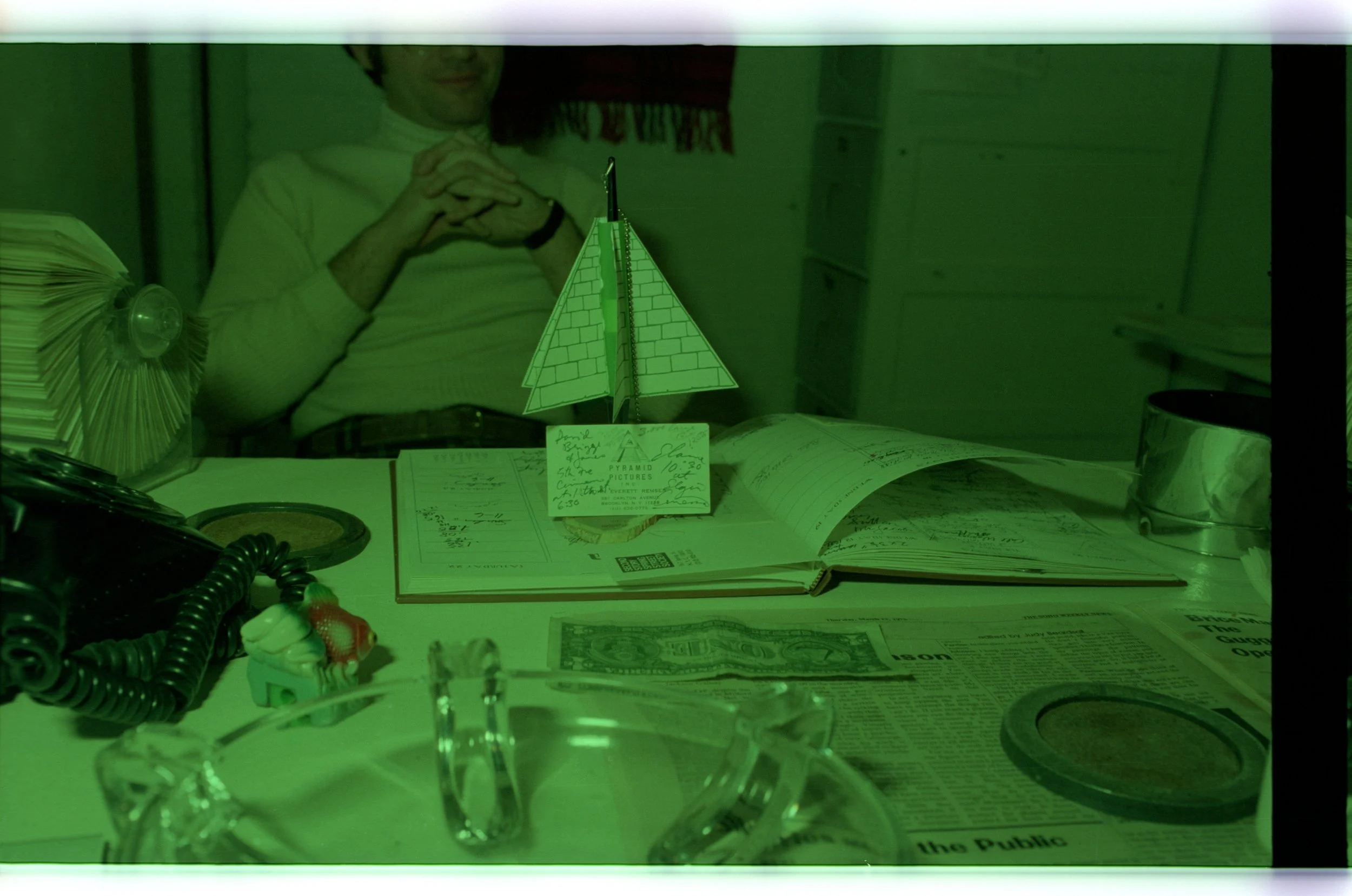
Photo Cooper Union, New York, 1975. Photographer Roland Van den Berghe.
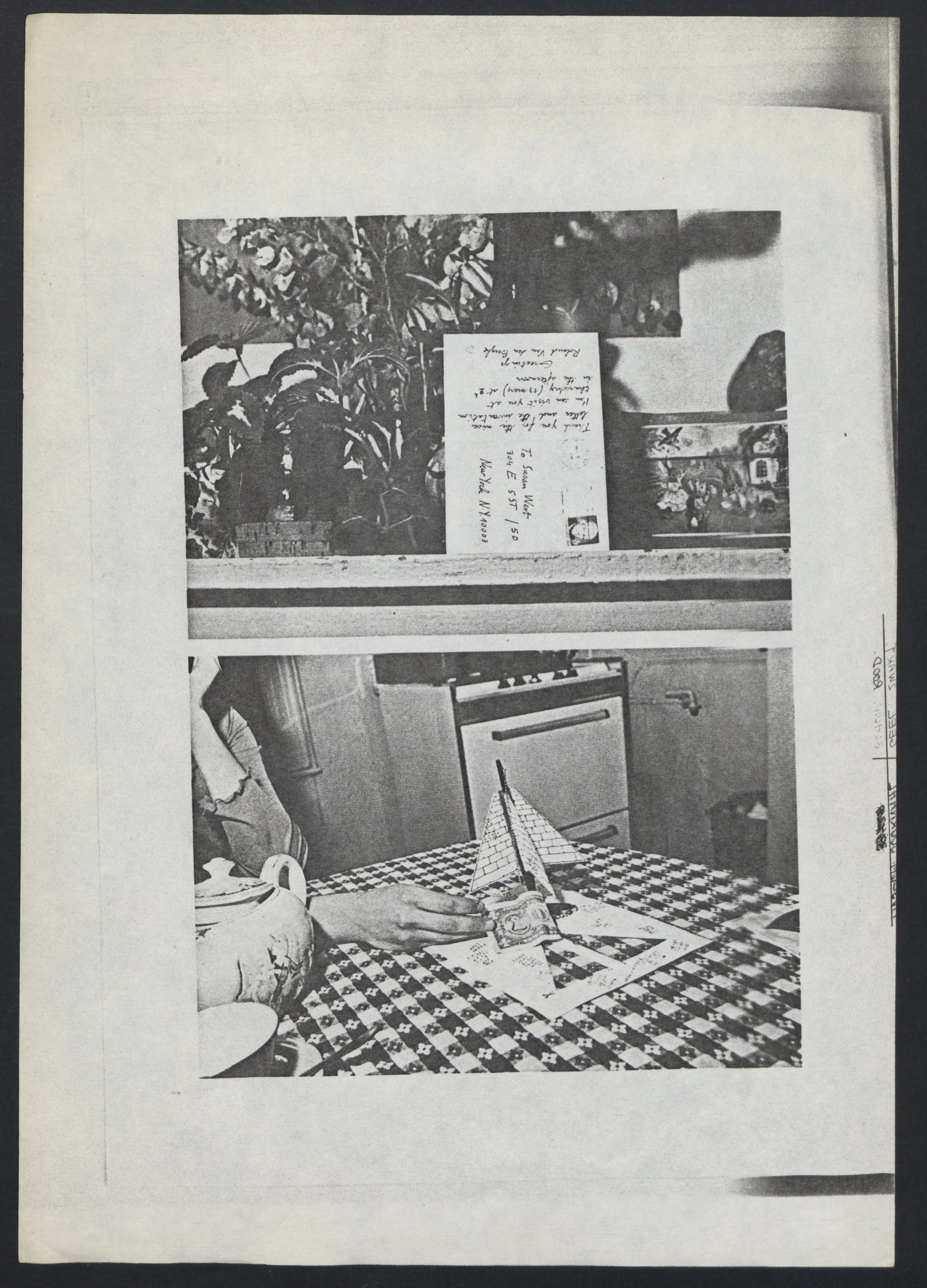
Photo Cooper Union, New York, 1975. Photographer Roland Van den Berghe.
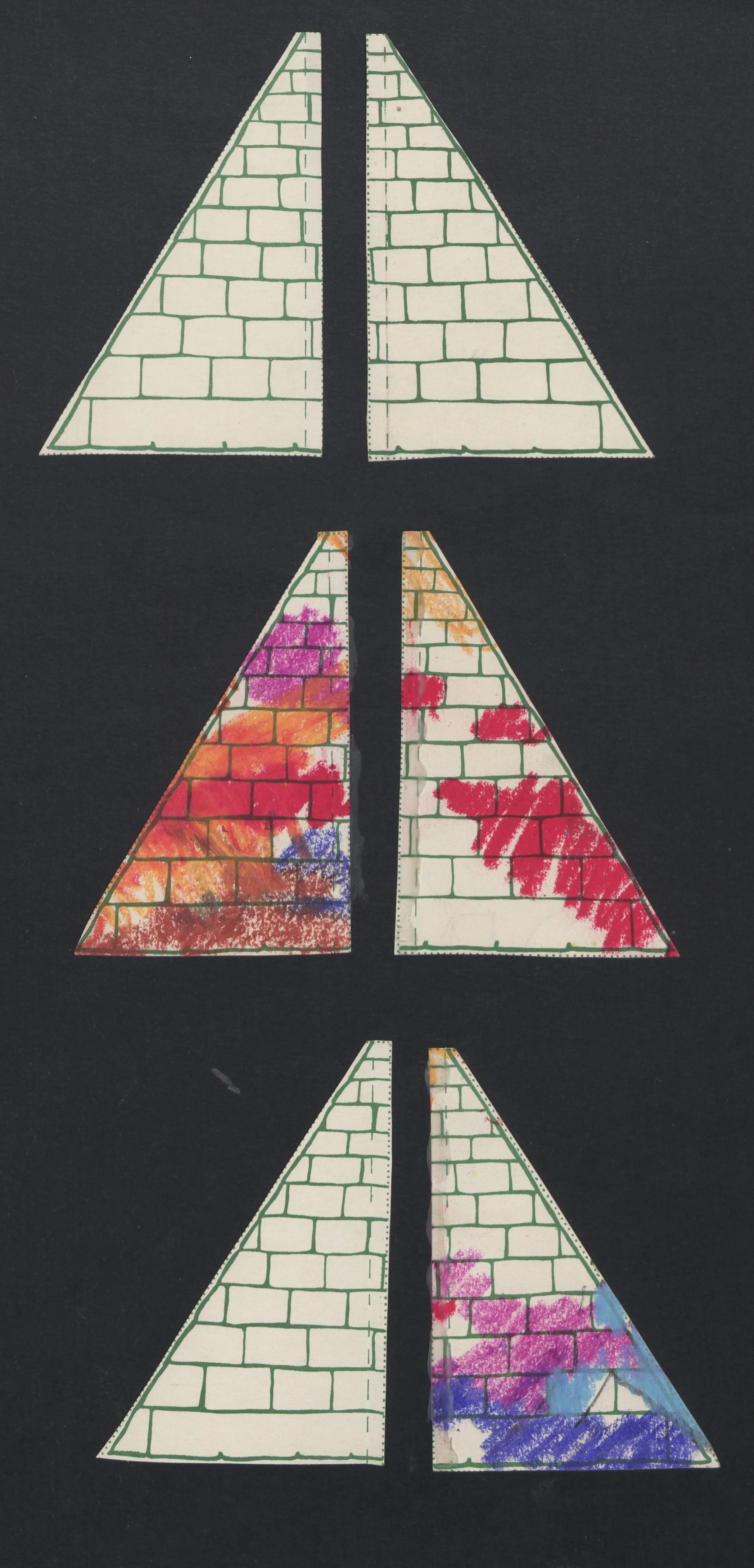
Educational materials, designed by Cooper Union, New York, 1975.
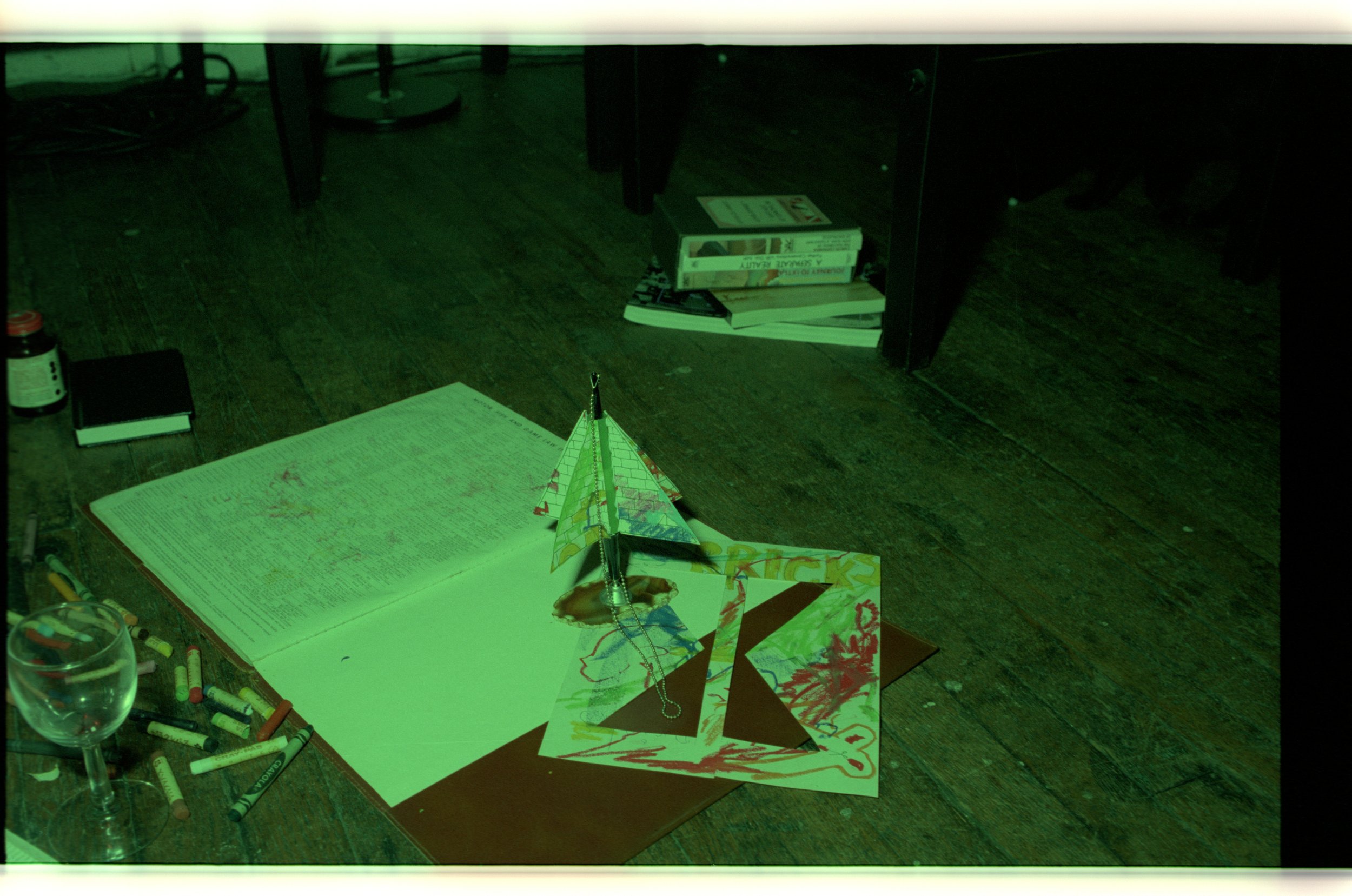
Photo Cooper Union, New York, 1975. Photographer Roland Van den Berghe.
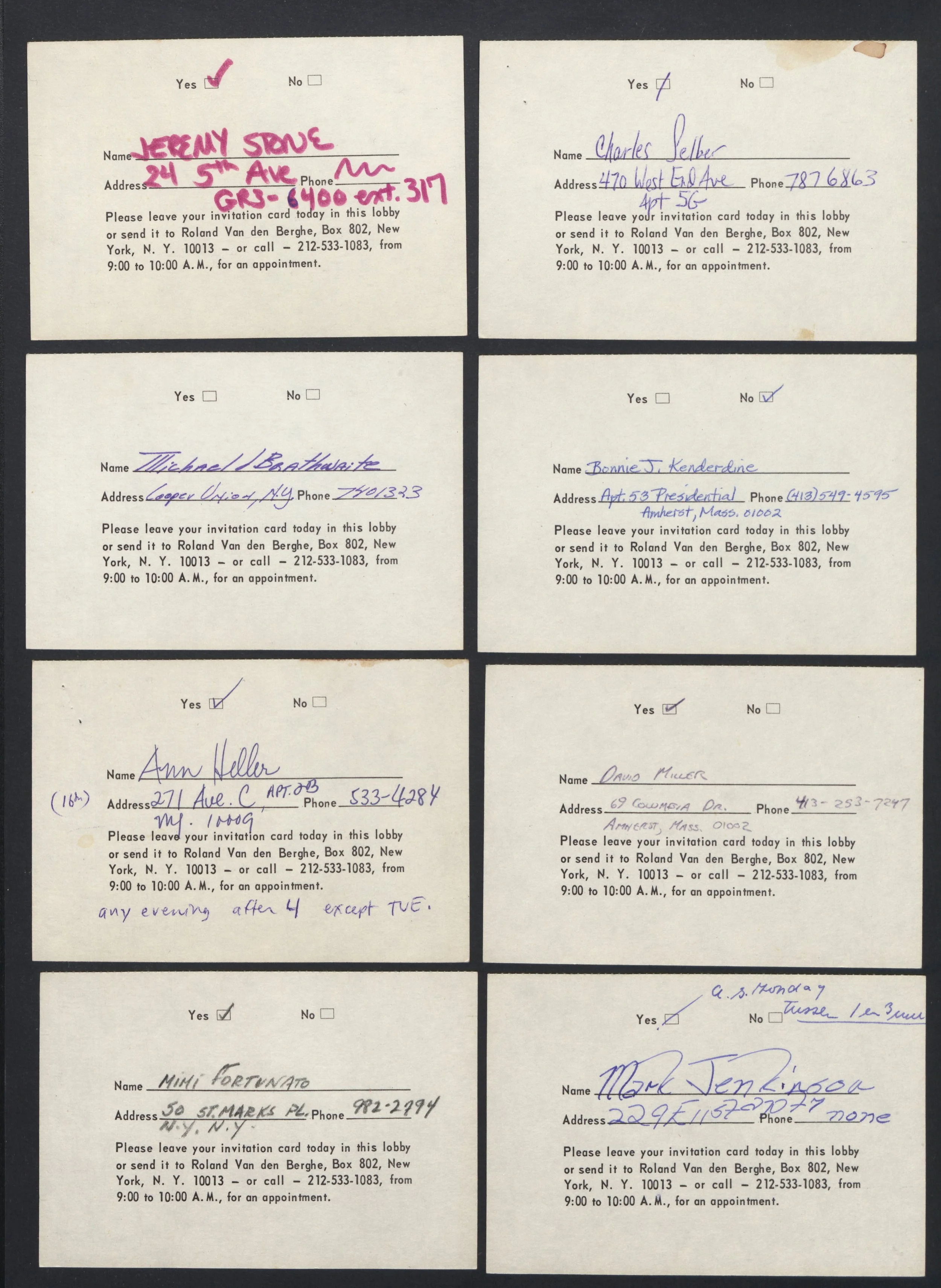
Invitation from Cooper Union, New York, 1975.
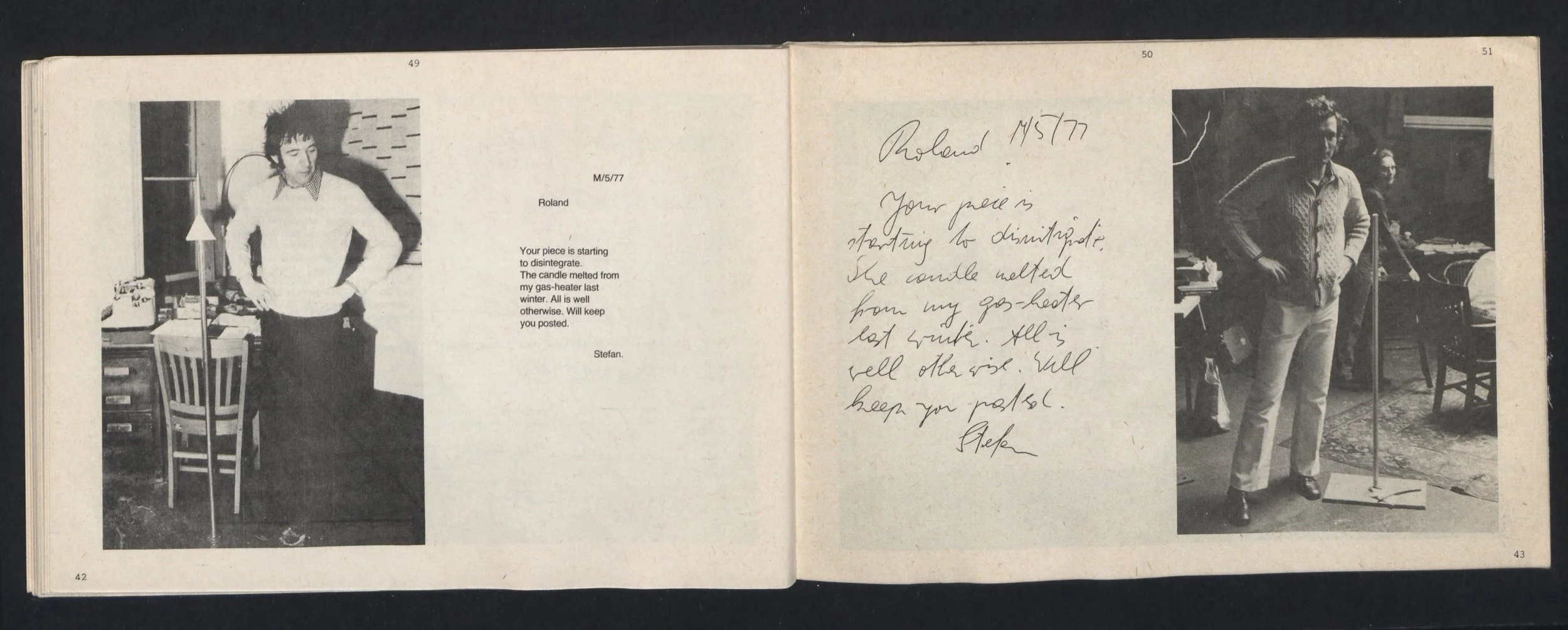
An artwork in Stefan Eins's studio, from the publication Phoenix or Eagle, Which?, 1975–1977.
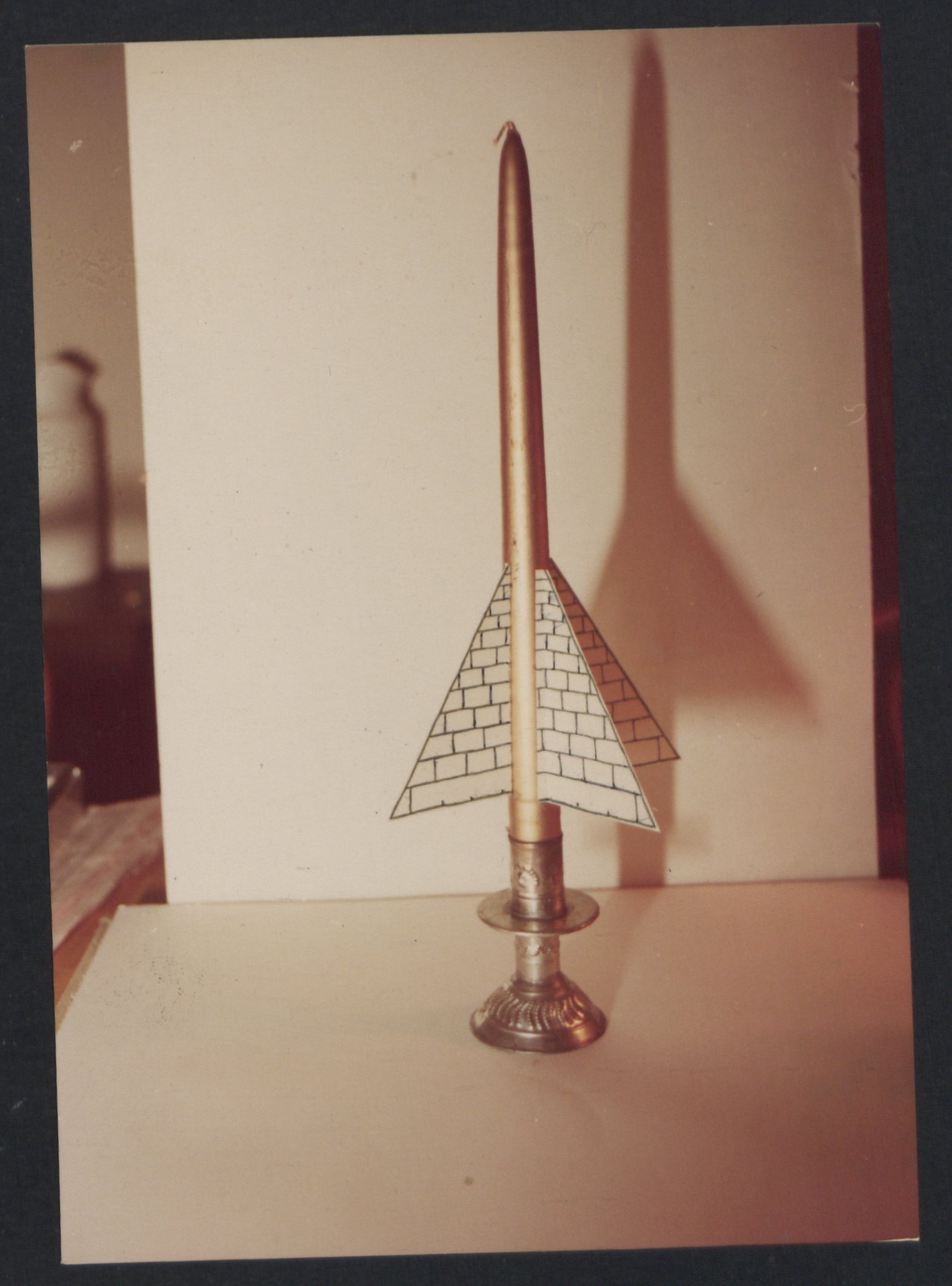
Photo Cooper Union, New York, 1975. Photographer Roland Van den Berghe.
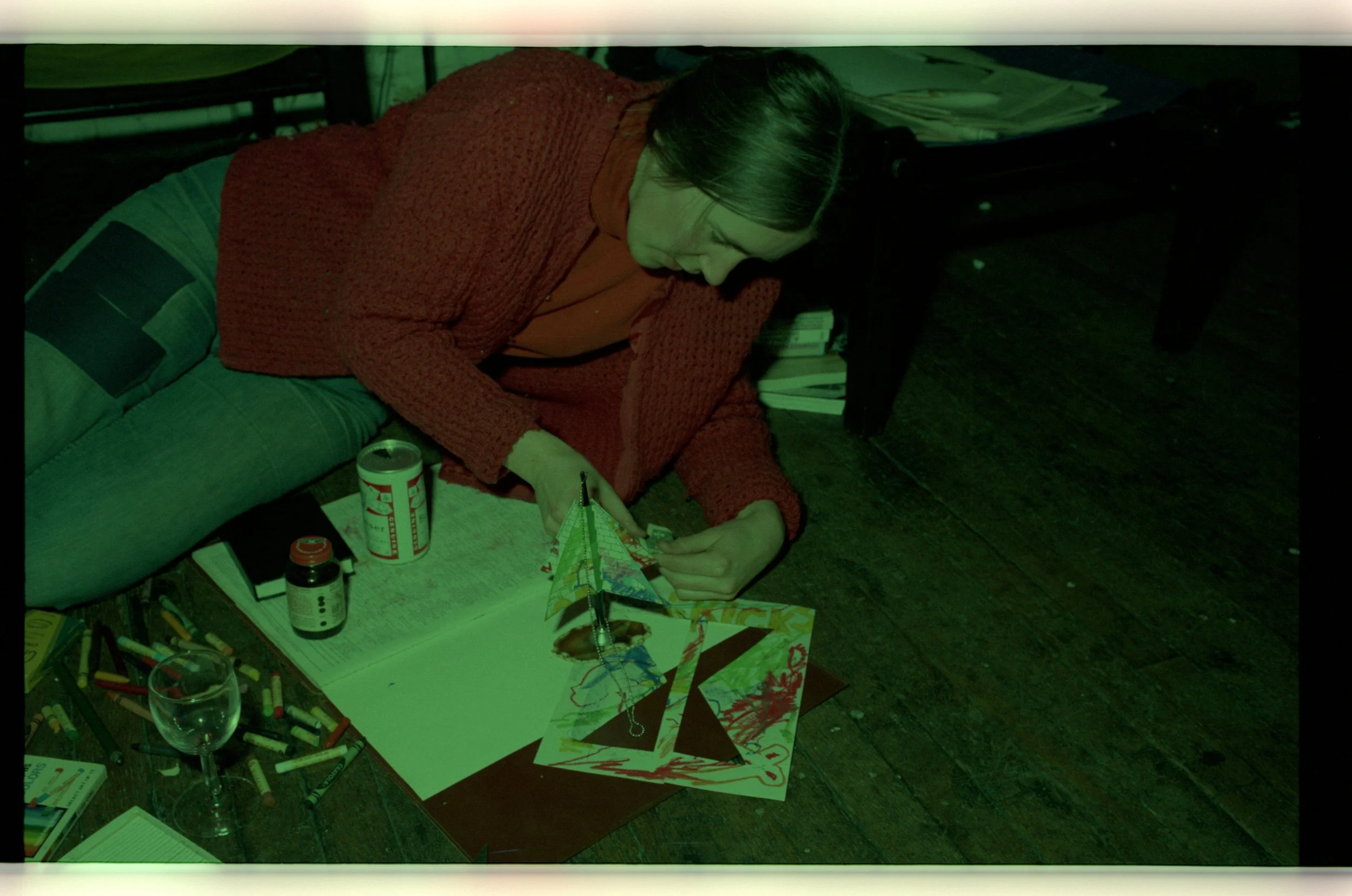
Photo Cooper Union, New York, 1975. Photographer Roland Van den Berghe.
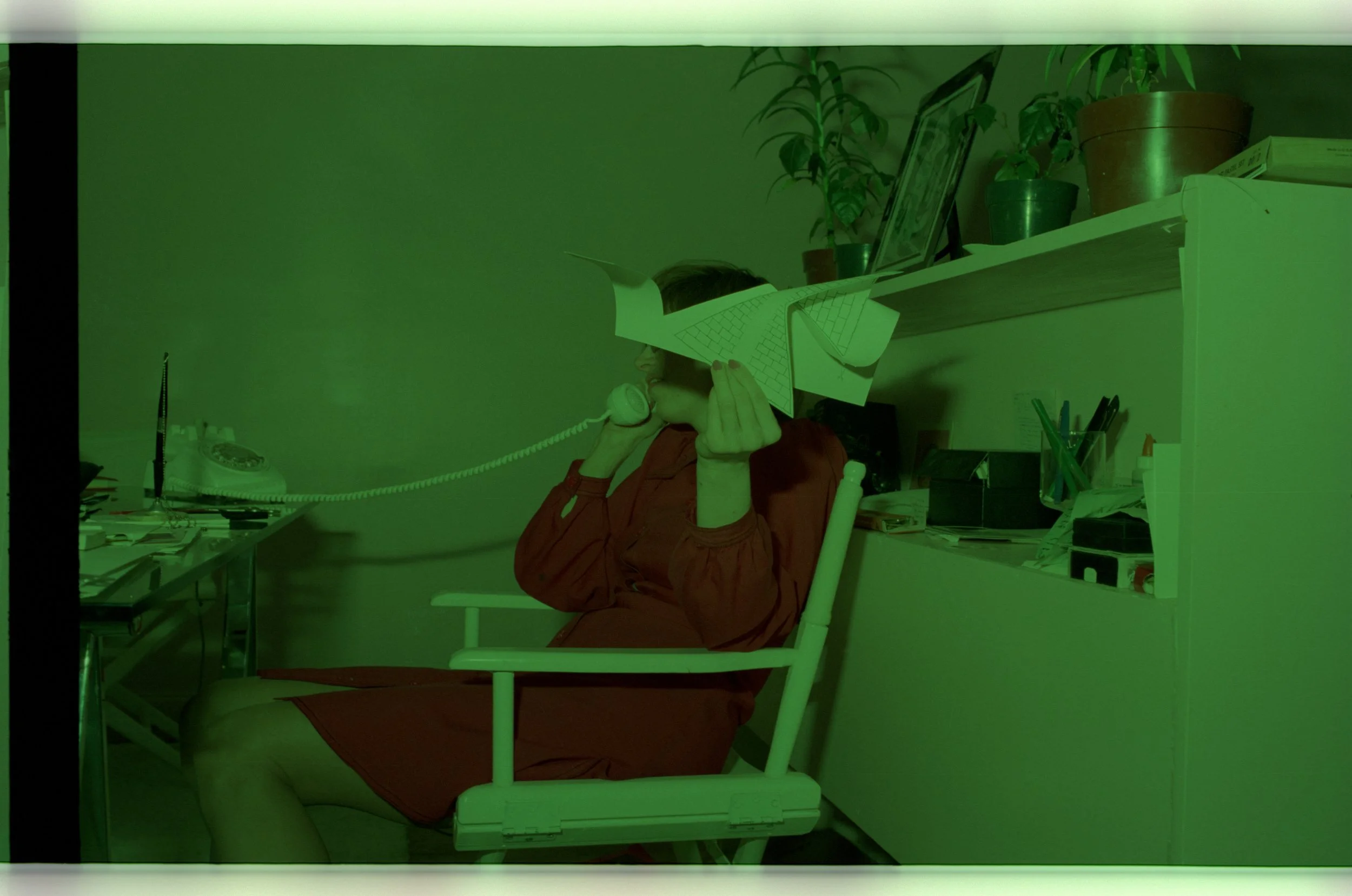
Photo Cooper Union, New York, 1975. Photographer Roland Van den Berghe.
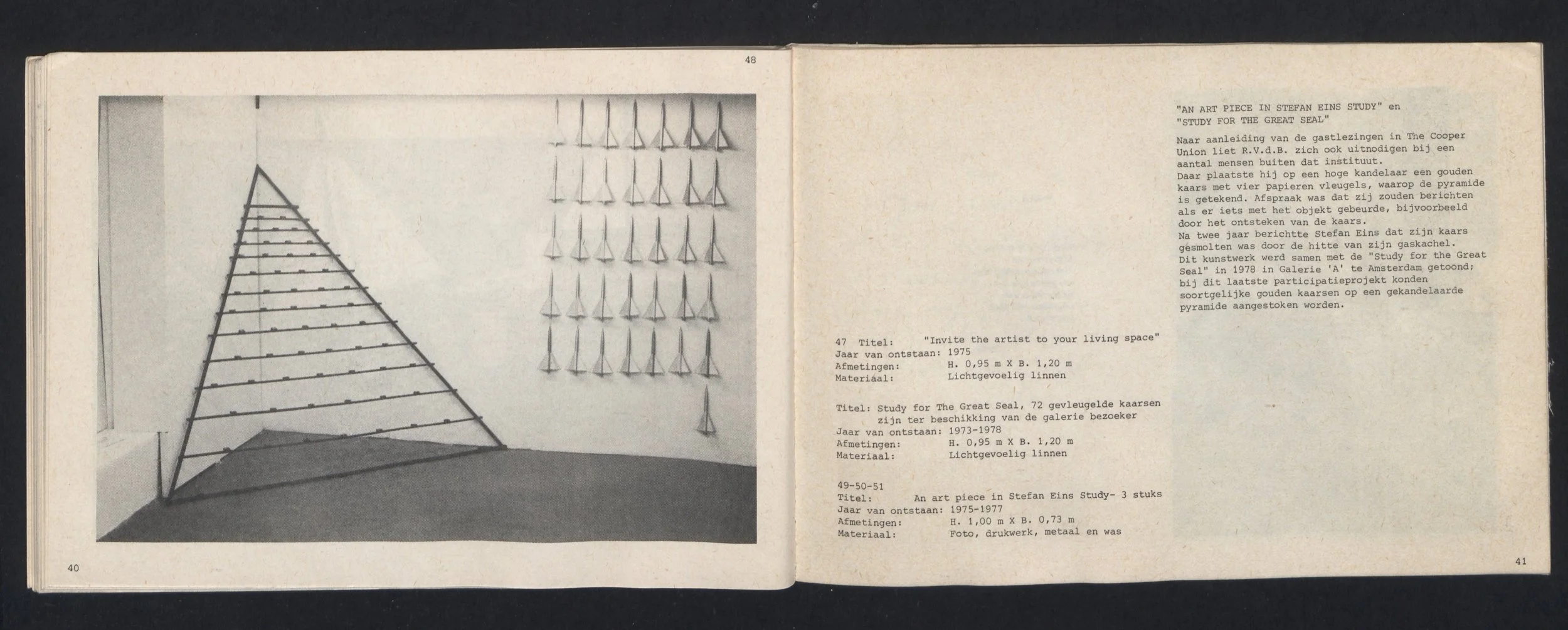
An artwork in Stefan Eins's studio, from the publication Phoenix or Eagle, Which?, 1975–1977.
Cooper Union
“Cooper Union was a participatory project at the School of Arts and Architecture that took place from February 26 to April 12, 1975. For Roland Van den Berghe, giving guest lectures was a prelude to a subsequent idea: some 50 students from the ‘Advanced Printmaking Workshop’ and “Sculpting,” were given the opportunity to invite the artist into their living spaces. Eighteen guests attended; during the visits, the artist always brought the same educational props, which functioned within the context of the lecture. About ten people went on to improvise, playing with the provided materials. This led to the collaborative creation of small sculptures.”
From: correspondence, Roland Van den Berghe archive.
“In 1975, Van den Berghe was in the United States, where he carried out one of his projects at the Cooper Union, School of Art and Architecture, in New York. He had been invited by the Cooper Union to give a series of guest lectures, but during the scheduled times when he was supposed to speak, he remained silent. This silence served as a sign of power within the otherwise progressive Cooper Union. Van den Berghe broke his silence, but only in students’ homes and among the lower ranks of the hierarchy. To that end, he first placed fifty of the invitation cards pictured here—addressed to him—in three different classrooms at Cooper Union.”
From: Power and the Individual, by Paul Hefting in Museum Journal, Series 23, No. 3, June 1978, p. 108.
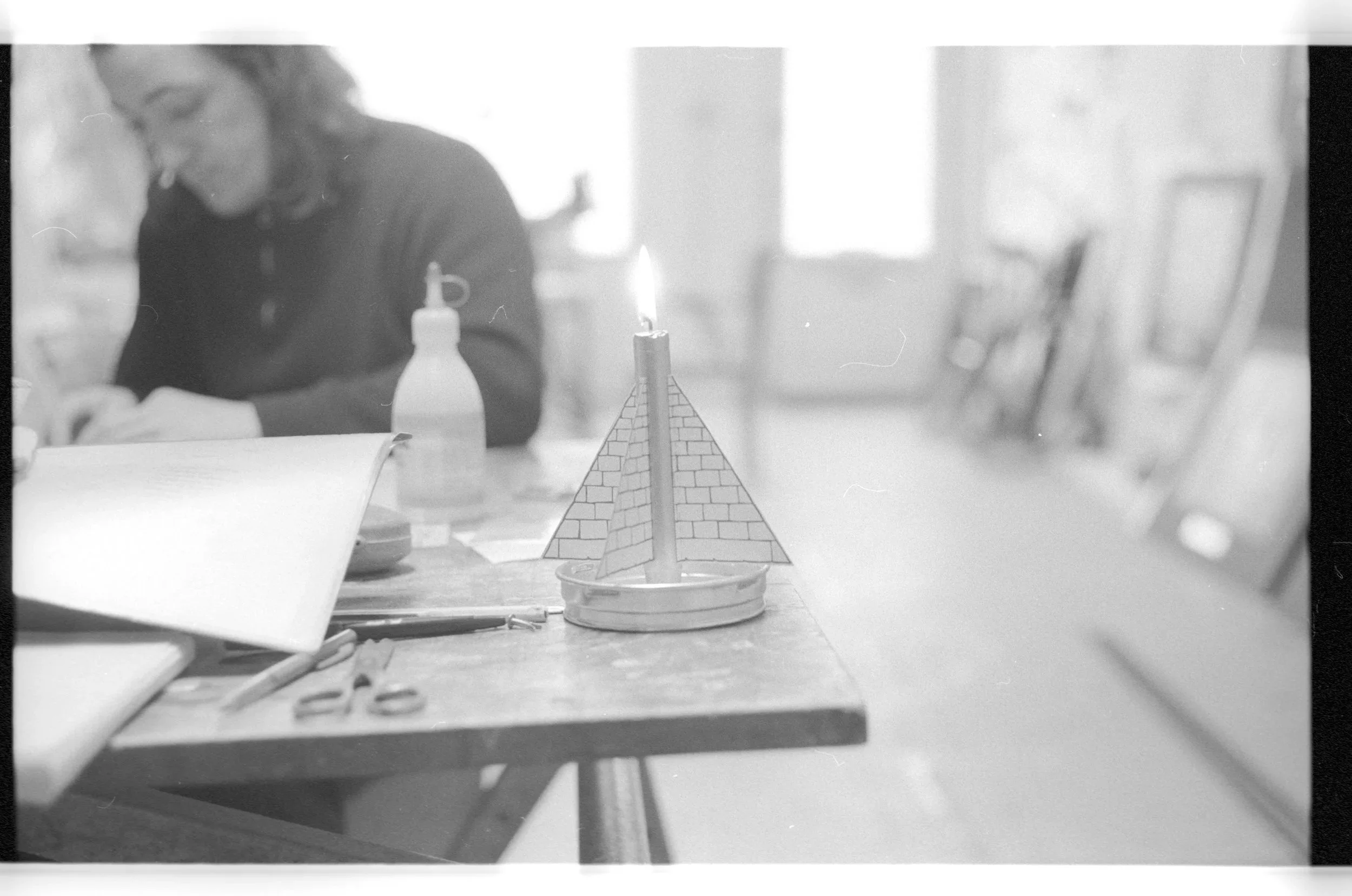
Photo Cooper Union, New York, 1975. Photographer unknown.
“During his visits to the students, Roland Van den Berghe brought the following items with him: a dollar bill, a pre-printed sheet of paper featuring a pyramid in dollar-green, and a pen in a holder mounted on an alabaster base. The students set to work with these materials. The pyramid and the dollar bill bearing the American coat of arms, The Great Seal, served as the starting point for discussions about the influence of certain symbols, which are widely disseminated by, for example, associating them with a public medium of exchange. Symbols that play a role within the ideology of certain groups in society. The pen was used, among other things, to sketch out the broad outlines of the ideology of those specific groups.”
From: Publication Phoenix or Eagle, Which?, Studium General, p. 38, 1973.
“AN ART PIECE IN STEFAN EINS’ STUDY” and “STUDY FOR THE GREAT SEAL”
“Following the guest lectures at The Cooper Union, Roland Van den Berghe also accepted invitations from a number of people outside that institution. There, he placed a golden candle with four paper wings, on which the pyramid was drawn, on a tall candlestick. The agreement was that they would notify him if anything happened to the object, such as the candle being lit. After two years, Stefan Eins reported that his candle had melted due to the heat of his gas heater. This artwork was exhibited alongside “Study for the Great Seal” in 1978 at Galerie ‘A’ in Amsterdam; in this participatory project, similar golden candles could be lit on a candlestick-mounted pyramid.”
From: Publication Phoenix or eagle, which?, Studium General, p.41, 1973.
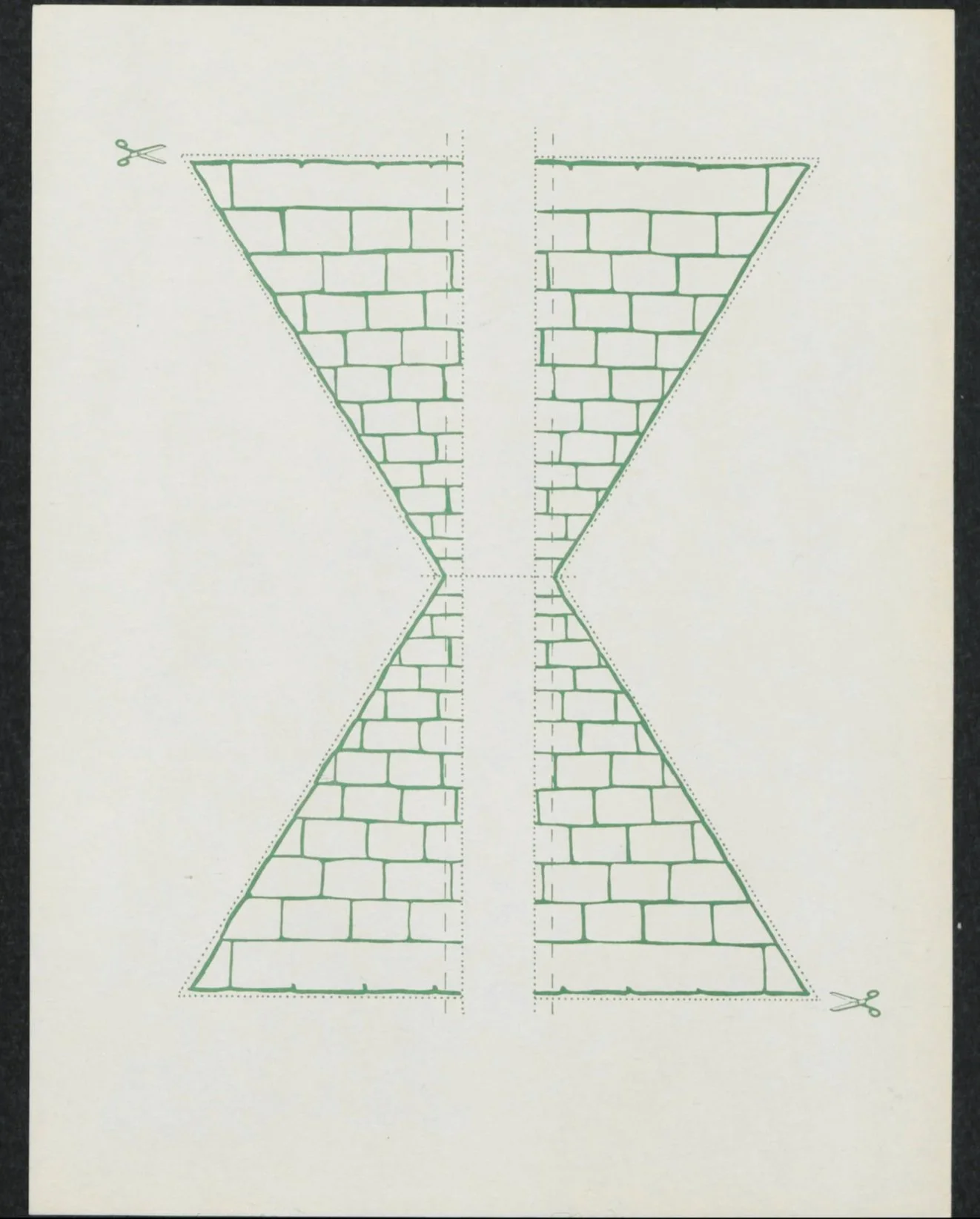
Design Cooper Union, New York, 1975. Scan.
Timeline
1974
Project Bommentapijt
Our Friendly “Boomerang” - Their Friendly “Miss Europe” Wittenborn & Co, New York, NY. The playing card set was distributed in the United States by Wittenborn & Co.
February 24, 1975
Correspondence between Dore Asthon and Roland Van den Berghe; an invitation to give a guest lecture.
February 26, 1975
“Invite the artist to your living space,” participatory project at Cooper Union.
April 7, 1975
Invited again by Cooper Union to give a guest lecture.
October 6–8, 1975
Group exhibition The State Horse’s Resting Mechanism, V.E.S.V.U. conference “Economy and State,” Vrije Universiteit Amsterdam.
1978
“An art piece in Stefan Eins’s study” and “Study for the Great Seal” at Galerie ‘A’ in Amsterdam.
Postcard An art piece in Stefan Eins Study, 1975.